If you have a problem, fix it. But train yourself not to worry, worry fixes nothing. - Ernest Hemingway
Showing posts with label Books. Show all posts

Saturday, 14 March 2026

GHOST-EYE: A journey into the unknown

If you really wish to enjoy Amitav Ghosh’s latest and his tenth novel GHOST-EYE, it will help if you believe in reincarnation and brought-forward ancestral memory from one’s past life, because reincarnation is a central theme of the novel. I don’t wish to scare you, but it would be a bonus if you believed in metempsychosis” too. (If you didn’t know the word, no issues; it would just mean you haven’t read Ghost-Eye). Metempsychosis is migration of the soul from the body of a dead animal to that of a human or the other way round. For example, you were an otter in your last life and are reading this now! (I understand there are many recorded cases when little children accurately describe another place and family where they claim to have lived in their previous life. But I remain a sceptic. As I read Ghost-Eye, I carried the burden of my scepticism.)

Amitav Ghosh, a significant literary voice cautioning us about the climate disaster, has used the delicate ecology of the Sundarbans not just as a background, but as a central character in his novels THE HUNGRY TIDE (2004), THE GUN ISLAND (2019), and GHOST-EYE (2025). All of them carry strong messages about saving our planet. Another interesting aspect of Amitav Ghosh’s novels is the ease with which he moves between the past and the present and between continents! (In The Gun Island, between the Sundarbans, Los Angeles, and Venice.) His craftsmanship as a novelist is awesome; his language, captivating. Despite my scepticism, I got immersed in Ghost-Eye in no time.

Soon, I discovered that the arcane title of the novel comes from a protagonist, a Sundarban-based climate activist Tipu, whose eyes are of different colours. Tipu’s “ghost-eye” gives him the power to clearly see the past, the future, and also, things happening far away. And the phrase ghost-eye becomes the signature of a group of mysterious humans with similar abilities. 

Moving on to the story, like The Gun Island, Ghost-Eye too is narrated by Dinu, a middle-aged single man who lives in New York. Dinu tells us the story of Varsha Gupta, a girl slightly younger than him, and who grew up—like him—in Southern Avenue flanking the Dhakuria Lake in Kolkata in the 1960s, although they didn’t know each other. One day, Varsha stubbornly demanded to eat fish and nothing else. She also claimed that in her previous birth, she had lived with her fisherwoman mother in a thatched hut near a river. Both fish and poverty were anathemas for Varsha’s wealthy, strictly vegetarian family. Devastated, they got in touch with Shoma Bose, a clinical psychologist—who happened to be Dinu’s aunt—to counsel Varsha.

A parallel story begins when Dinu is confined in his New York flat during the COVID pandemic. Far away in the Sundarbans, a company is about to set up a large coal-based plant, despite warnings from environmentalists that it would be a disaster for the tidal archipelago. Tipu, who is among the people who are trying to block the project, believes there is a connection between averting the crisis and a former client of Shoma. Through video-calls across unstable connections, Tipu prods Dinu to trace that particular client of Shoma. Digging into his memories of Shoma and bits and pieces of clues, Dinu tries to identify the client like a detective, as Shoma’s professional ethics doesn’t allow her to reveal anything about her clients.

There are two ways of looking at the immensely readable novel. I feel that while Ghosh’s first novel based in the Sundarbans, The Hungry Tide, explores the intersection between nature, folklore, human survival, and science, in his latest Sundarban-based novel, while the first three elements remain, “science” has been replaced by the paranormal”. Given the wiring in my brain, I cannot be happy about the shift personally.

However, you can also say that reincarnation has been used merely as a literary tool here, Amitav Ghosh—through folklores of the people of the Sundarbans—is actually looking at our past, and the disaster that our future is increasingly looking like

Bengaluru / 14 March 2026

Thursday, 12 February 2026

Joining the Khan Market Gang


After an insanely sumptuous breakfast at our New Delhi hotel, my son Ritwik and I went to see the samadhi of a frugal eater who would go on fast at the drop of a hat. Rajghat was a few metro stations and a short autorickshaw ride away from our hotel.

Ritwik, who belongs to the cash-rich-time-poor generation of modern India, had come to Delhi for two days’ work, but didn’t have the time to visit home. So we decided I would spend a Saturday with him. Here is a brief note on the exhilarating day.

At the place where Mahatma Gandhi was cremated in Rajghat, a low rectangular black marble monument has been built. It was designed to be minimalist and simple to reflect the values of the great man. The not-so-great men who killed Bapu are our rulers today. But they haven’t messed with his samadhi, at least not yet, unlike the vandalism they have done in Jallianwala Bagh. Lata Mangeshkar was singing Gandhi’s favourite Gujarati bhajan, "Vaishnava Jana To” when a pleasant breeze blew over the green lawns shining bright under a clear sky in the late-winter morning. Some visitors—Indians and foreigners who incidentally hadn’t come on tourist buses—were sauntering past the memory of the greatest son of modern India. Mohandas Karamchand Gandhi still draws people. I am waiting for the day when he reclaims his place in the public life of India.

From a sad landmark of modern India to the beginning of the Indian civilisation. The section on the Harappan civilisation in the National Museum was overwhelming. I had no idea that their pottery was so large, in such varied shapes, and with such intricate designs. When their seals with right-to-left writing come out of pages of books and present themselves in three dimensions, it’s an indescribable feeling for the viewer. Unfortunately, the two most relatable artefacts of the period, the dancing woman and the bust of a bearded man, are in Pakistan. But what is in India is no less remarkable.

What bowled me over completely was a woman’s skeleton excavated in Rakhigarhi in Haryana between 1997 and 2000, which is incredibly undamaged. In his book EARLY INDIANS, Tony Joseph has written that only one of the fifty to sixty Rakhigarhi skeletons (c. 2600–2200 BCE, the Mature Harappan phase) offered DNA good enough for genetic analysis. And that skeleton (not the one in National Museum) settled one question finally. The Harappan civilisation happened before the steppe pastoralists migrated into India. the two groups had no shared genes.

As I looked at the woman wearing shell bangles on her left wrist, she opened a window to my distant past. She reminded me that we are descendants of an incredibly brilliant, peace-loving, mathematically gifted people. If young Indians are a force in the world of technology today, maybe, 5,000 years ago, the woman lying before me had passed on some of the genes that made it possible?

It was lunchtime and after walking many miles, the breakfast was almost forgotten! We weren’t far from Khan Market, where we went up a narrow staircase to reach Khan Chacha’s eatery. I am sure I had done a few good deeds in my previous life which entitled me to savour such a delectable combination of rumali roti and mutton at Khan Chacha’s. Must visit the place again because I doubt if there is a comparable place in heaven, which anyway is an unlikely destination for me.

Khan market, named after Gandhi’s friend Khan Abdul Ghaffar Khan, was set up in 1951 to rehabilitate Punjabi refugees from West Pakistan. Over time, thanks to their enterprise, it has evolved into a first-class commercial hub frequented by politicians, journalists, diplomats, and other well-heeled Delhiites. For this reason, the Sanghi types coined the derogatory term “Khan Market Gang” to describe people who wear Western clothes but not a tilak, who read books, speak English, and are generally unaware of the original phase of the acche din two millennia ago. I noticed that the incorrigible Khan-Market crowd is yet to soak in the “sanskari” vibes and many of them still enjoy meat and reading. (Also, women’s clothes showed a distinct lack of disinclination towards the decadent West.)

To cater to readers among them, there are wo terrific bookshops in Khan Market: Bahrisons and Faqir Chand. We happened to walk into Bahrisons, which had books stacked from floor to ceiling, where Ritwik and I got exactly the books we were looking for. (Faqir Chand, a few blocks away, looked almost identical.) On top of that, there were copies of Amitava Ghosh’s latest novel _Ghost Eyes_ signed by the author. Ritwik grabbed two copies, one for a friend.

By then, I was quite tired and wanted to retire. But fortunately, I remembered that the National Gallery of Modern Arts (NGMA in short) which we had crossed in the morning wasn’t far away. For a long time, I had wanted to see Tyeb Mehta’s Human Landscape once again. And a Hemen Majumdar painting of a woman who was startled and embarrassed, presumably because someone had seen her while she was undressing.

Ritwik hadn’t visited NGMA, which has the finest collection of modern Indian art from Rabindranath Tagore to Bikash Bhattacharya. For the following three hours, Tagore, Abanindranath, Nandalal Bose, Ramkinkar Baij, Binode Behari Mukhopadhyay, Amrita Sherghil, Maqbul Fida Hussein et al took us to another world. I saw Tyeb Mehta’s painting again and was as amazed as I was the first time, but I couldn’t find Hemen Mazumdar or the large canvas of Jogen Chowdhury. (Why?) I was transfixed as I stood before a simple FN Souza drawing of a man in a few strokes. His haunting eyes gobbled me up for a while. It is a shame that NGMA doesn’t allow photography and hence I cannot show you the picture.

While our taxi went through a tree-lined avenue with embassies on either side of the road, I thought the areas we covered yesterday, i.e., a triangle with Aerocity, Rajghat, and Khan Market at its vertices, was possibly one of the finest urban landscapes of our time.

To wrap up, let me not forget say that contrary to popular belief, the Delhi people we met were almost epitomes of politeness. None of the three autorickshaw drivers we met tried to fleece us. Rather, they asked for modest amounts. Once, when we had to travel much longer than what the auto driver had initially anticipated, he didn’t grumble. And he was visibly pleased when I paid him for the extra distance without his asking for it. The oldest among the three, sixty plus Suresh Pandit, a proud brahmin and a true vegetarian, drives 20+ kilo metres from his East Delhi home to the Khan Market auto stand. Pandit said he was struggling to make ends meet because the app-based taxies were driving auto rickshaws out of Delhi roads. I was tempted to ask him if he realised that the political party he supports is doing exactly the opposite of what Gandhi prescribed, they are making life more difficult for the people who are already vulnerable.

 
I didn't ask him the question and he smiled warmly when we parted.

.

 Bengaluru / 08 February 2026


Wednesday, 3 March 2021

The Poet of Famine


The revolutionary Bengali poet Sukanta Bhattacharya, born on 15 August 1926, died before he was 21.

The Wikepedia contains a brief page on him. It summarises his life accurately though inadequately in the following words:

“As a poet as well as a Marxist he wielded his pen against the Second World War, the famine of 1943, fascist aggression, communal riots etc. His poems, which describe the sufferings of the common people and their struggle for existence, look forward to an exploitation-free society.”

In a poem in his collection of poems titled The Passport (ছাড়পত্র) Sukanta wrote,

“Yet, the inevitability of starvation

Spreads through me terrible blight.

I am a poet of famine – in my nightmares

I hear footsteps of death every night.”


(তবুও নিশ্চিত উপবাস

আমার মনের প্রান্তে নিয়ত ছড়ায় দীর্ঘশ্বাস –

আমি এক দুর্ভিক্ষের কবি,

প্রত্যহ দুঃস্বপ্ন দেখি, মৃত্যুর সুস্পষ্ট প্রতিচ্ছবি!)


The self-proclaimed “poet of famine” possibly died as a result of starvation, of tuberculosis, two months and two days before what would have been his 21st birthday (and the Independence Day of a new republic), at Jadavpur T. B. Hospital in Kolkata.

Sharing my translation of an iconic poem of Sukanta. Its last line has also become a catch-phrase in Bangla.

I do not know who the great prophet was, who Sukanta addressed in this poem. Could he be the greatest poet of Bengal who had spread a message of love and beauty through his life? Rabindranath Tagore had been 66 when Sukana was born. The Bengal Famine that killed three to four million people happened two years after Tagore’s passing. It is impossible that Sukanta was uninfluenced by Tagore. Rather, like every educated Bengali, his social sensibilities and intellectual development would have been deeply influenced by the seer.


To the Great Prophet

Great Prophet! The hour of poetry is over,

Let our book be prose from cover to cover.

End the rhythm of words and rhyme,

The hammer of the prose – the call of our time!

The softness of the verse I shall tell,

Poetry, I must bid you farewell;

In the land of the hungry and the dead

The full moon is a lump of burnt bread.


হে মহাজীবন


হে মহাজীবন, আর এ কাব্য নয়

এবার কঠিন, কঠোর গদ্য আনো,

পদ-লালিত্য-ঝঙ্কার মুছে যাক

গদ্যের কড়া হাতুড়িকে আজ হানো!

প্রয়োজন নেই, কবিতার স্নিগ্ধতা–

কবিতা তোমায় দিলাম আজকে ছুটি,

ক্ষুধার রাজ্যে পৃথিবী-গদ্যময়ঃ

পূর্ণিমা চাঁদ যেন ঝলসানো রুটি।


Translated on 2 March 2021


Sunday, 6 September 2020

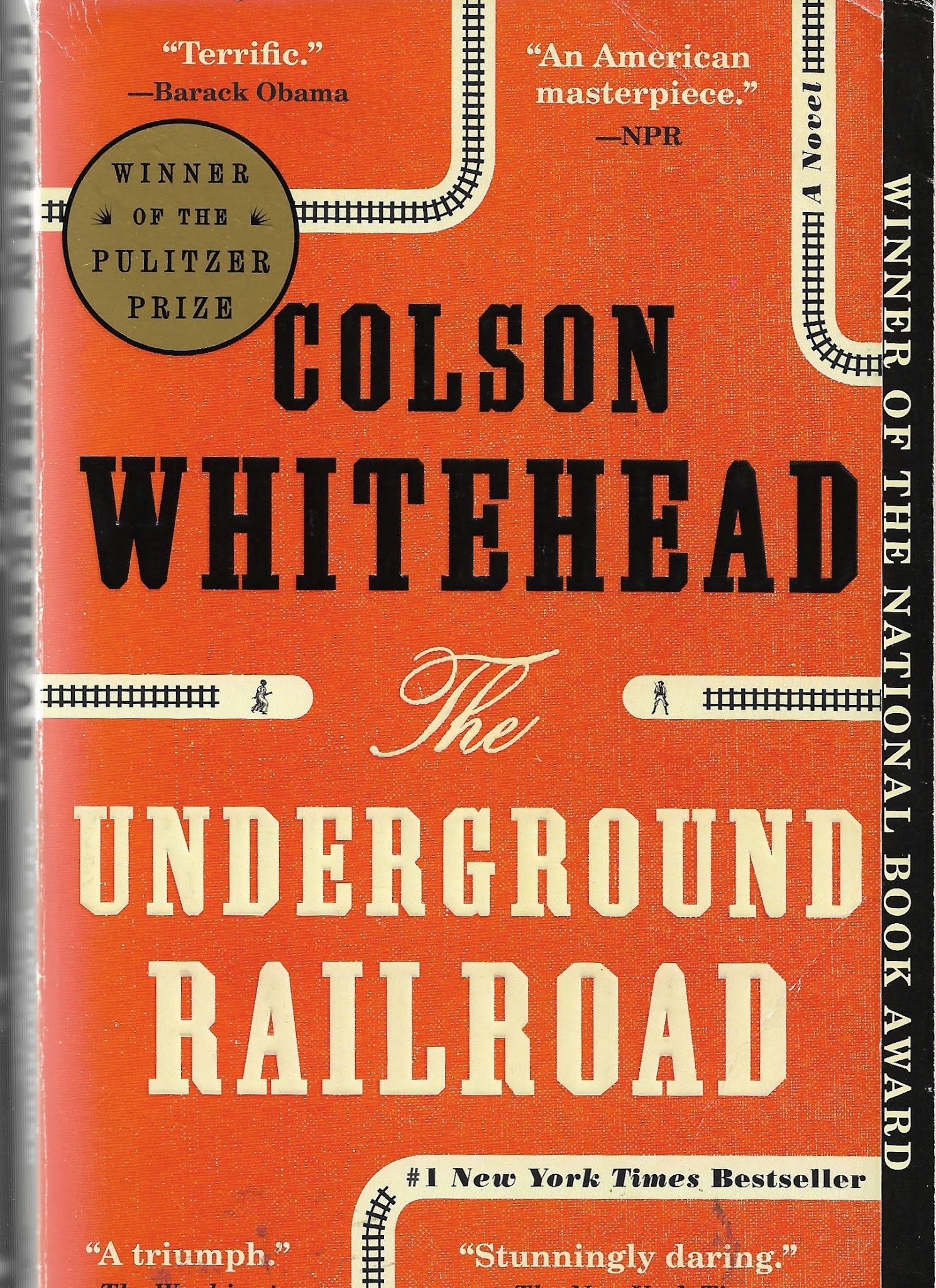
The Underground Railroad


Until my friend Chitrita gave me the book, I hadn’t heard the name of Colston Whitehead. Neither had I come across the string of words Underground Railroad. I will come to Colston Whitehead shortly, but before that, let me describe what “underground railroad” means in the context of American history.

Chattel Slaves in America: Men, women, and children kidnapped from Africa, ferried across the Atlantic chained to the hull in dark holds of ships, and sold at port-town markets to white American farmers. Besides suffering the ignominy of being treated as personal possession, they lived a life of such relentless hardship and pain that very few would live to become old.

Young women were also used as producers of more slaves; they were allotted to male slaves with strong physique, unless they produced mulatto babies as consequence of rape by owners or their overseers. Children, routinely taken away from mothers, were made to work in fields as soon as they were able to walk. Rape of and other sexual brutality on women were so common that we hardly see black Americans who are really black. When Alex Haley, the author of the 1976 novel Roots, The Saga of an American Family went to the heart of Africa in search of the hamlet from where one of his eighteenth-century forefathers, Kunta Kinte had been kidnapped, Haley was shocked to see the unblemished blackness of the African skin there.

For the slightest lapse, real or perceived, slaves were subjected to often sadistic torture by their white 

owners and their overseers. Lashing with a rope whip with nine notches – disingenuously named cat-o’-nine-tails – was the least punishment. The worst was reserved for people who had tried to run away and got caught. For a man, it could be cutting off his penis, shoving it into his mouth, stitching his lips and letting him die a slow death accompanied by even more torture, as his white owners and their guests watched the spectacle while having dinner in the open. For a woman runaway, it was so brutal that I find it difficult to type out.

Given the life they lived, many slaves fled their masters every year despite the humongous risks involved. On the other hand, there were professional “slave catchers”: white men who made a living out of tracking down and bringing back runaway slaves to their masters, sometimes from thousands of miles away. It was possible to recapture fugitive slaves even from the North American states where slavery was illegal, thanks to the Fugitive Slave Law of 1793 which granted immunity to slave catchers and compelled local officials to assist them. As the law required scant documentation to claim that a coloured person was a fugitive, slave catchers also kidnapped free Blacks, especially children, and sold them into slavery. The Wikipedia (accessed on 31 August 2020) says:

The law deprived people suspected of being slaves the right to defend themselves in court, making it difficult to prove free status. In a de facto bribe, judges were paid a higher fee ($10) for a decision that confirmed a suspect as an enslaved person than for one ruling that the suspect was free ($5).

However, the world is never devoid of people who would help their less fortunate brethren. Lots of people unknown to each other, both white Americans and free African Americans, collaborated to set up a network of safe houses and secret passages that were used to transport slaves from the southern states of America. Their destination was either British North America, most of which is presently Canada, or the northern American states which were more tolerant towards “negroes” in varying degrees, particularly certain cities like Philadelphia and New York, the latter being a “factory of anti-slavery sentiment.”

The “Underground Railroad” was neither a railroad, nor was it underground; it was a metaphorical name given to the network narrated above. The “railroad”, which did not have offices or official documents, began in the late 1700s and grew steadily until the American Civil War (1861-65). “One estimate suggests that by 1850, 100,000 enslaved people had escaped via the "Railroad".” [Wikipedia, accessed on 31 August 2020]

What if such a subterranean railroad actually existed in the mid-nineteenth century? Surely, it could only be in a fiction? In his Pulitzer-Prize-winning novel The Underground Railroad, African American writer Colston Whitehead (born 1969) takes his readers in a reverse journey from a metaphor to the imagined reality of an impossible railroad with the inviolable truth of bondage hanging as a constant backdrop.

It is the story of Cora, a third-generation slave born in a cotton farm in Georgia who was at the cusp of womanhood. Cora, who didn’t “have” a father like many other slaves, also had the misfortune as she had been abandoned by her feisty mother who ran away. Deep within, Cora nursed a desire to trace her mother and confront her, but she did not seriously consider the option of running away, which wasn’t much of an option in any case.

Yet, one moonlit night, she escapes because of a combination of circumstances and a newly recruited slave, Caesar who had befriended her. Caesar was like no coloured man Cora “had ever met,” because he could read and write, a fact which he concealed for his life, as having even an elementary education was a crime for a slave and it would attract severe punishment. Cora and Caesar don’t get into a physical relationship but continued as comrades in a shared quest for freedom.

They outrun and outwit their pursuers, manage to get the better of a vigilante group, and reach a shelter offered by a stooped grey-haired white Pennsylvanian, Mr. Fletcher. Fletcher, who abhors “slavery as an affront before God”, smuggles them out to the nearest railroad station, taking enormous risk – like every other person who collaborates with the railroad, irrespective of the colour of their skin.

After narrowly winning the first round against the southern white man who “was spat from the loin of the devil ….” Cora and Caesar climb down a steep staircase hidden beneath a trapdoor to a platform of the Underground Railroad. Their real journey begins.

Cora experiences “civilised” white people in South Carolina who do not brutalize her body, but are equally keen to own her mind, until the veneer of civilisation is flaked away one evening in a sudden burst violence that separates her from Caesar.

In North Carolina, after Cora sees miles of dead blacks hanging from trees, a kindly and extremely scared white man and his wife hide her and her chamber pot, on an airless platform in their attic, where Cora continues to nurse her dream of meeting mother. From a hole in the wall of her hideout made by an earlier fugitive, Cora watches a town square and a town without a black soul except when one is ferreted out of a safe haven like Cora’s, and is savagely done to death along with the white family that sheltered them, loudly cheered on by an ecstatic crowd. Cora stays there for months, until her luck runs out, and her hosts’.

Cora is back in shackles, this time, not metaphorically. She is chained to the floor of a wagon, perhaps closing a circle that began with her grandmother’s journey across the Atlantic.

As she heads towards a terrible future, her journey, wildly oscillating between despair and hope, traces the changing landscape and people of different southern states while America moves towards an inevitable bloodbath and Civil War.

Colson Whitehead’s novel, a story of enormous courage and resilience, resonates in our time as it opens our eyes to the depths people can climb down when hatred captures the mind of an entire community. Using a gruesome chapter of American and world history as the backdrop, Whitehead retells – in captivating prose – the story of tribalism and violence that are innate to humans.

The story makes us think if our species has a future.

Colson Whitehead / The Underground Railroad / First Anchor Books edition, 2018 / www.anchorbooks.com / Copyright © 2016 by Colson Whitehead

Monday, 31 August 2020 / 1453 words


Wednesday, 22 April 2020

The Cuckoo’s Nest


Malayalam writer Sethu began his literary journey in the 1960s and over time, became a leading author in his language. The Cuckoo’s Nest is not a translation of one of his Malayalam works; it’s the first novel Sethu has written in English. It was an excellent idea for him to tell the story in a language that is followed by a significant section of the educated Indian middleclass. The Cuckoo’s Nest makes us reflect on some of the dreadful realities of our time in the context of the country as a whole.

In a short, 260-page novel, can anyone cover a range of truths from the bottomless misogyny that cuts across geography and cultures of India, to the deep hatred of the upper-caste Hindu towards the the children of lesser gods, to the “othering” of a part of our own people for pitiless political gains and the eager collaboration of a part of the Hindu religious establishment in the project, to the hypocrisy of the Catholic Church, and more importantly, to an undercurrent of love and tolerance of a people which are much older than the Western concept of liberal humanism, and which has held together a civilisation for five thousand years? Can you think of a novel that connects a Khap Panchayets of Haryana to an exploitative convent in Tamilnadu and yet manages to convey a message not of despair but of resounding hope? I wouldn’t have, unless I had read this novel.

The central character of The Cuckoo’s Nest is a former holy sister who has renounced her role in a convent, but not her faith in Jesus. Sister Agatha has left her convent and set up – with the help of some other noble souls in a small town in Tamilnadu – a home for young women who the society throws out for one reason or another. Her shelter becomes a microcosm of those margins of the Indian society where lots of unfortunate Indian women struggle before falling off the cliff. Agatha’s aim is to offer them a nest until they are ready to fly away. In the context of her nest, she is religion-neutral and doesn’t preach. Rather, she forbids religion there, except within the personal space of each occupant.

Agatha doesn’t tread the hackneyed path of tailoring classes or formal “education”. She doesn’t even hand-hold the hopeless girls. She just encourages them to find their own path to an honourable life. Some of them succeed, some don’t.

But the story of every one of the unfortunate girls makes compelling reading. While offering a glimpse into a largely unknown world, Sethu weaves their yarns with the refined skill of a master craftsman, which makes the book easy reading, despite its somewhat heavy contents. However, I wish he had the support of a more ruthless editor and the book was free from the rather numerous linguistic glitches and typos.

[The Cuckoo's Nest, Sethu, Niyogi Books, New Delhi, 2019]

22 April 2020

Sunday, 15 September 2019

The Golden Treasury


I wouldn’t say Palgrave’s Golden Treasury was a constant companion of my father. But surely it was the book he would read most often after the eight-volume leather-bound set with the expository title Book of Knowledge, and the 28-volume Encyclopedia Americana, which was the biggest investment in his lifetime. (He couldn’t afford to buy The Encyclopaedia Britannica.) His library was an eclectic mix of books of poetry to religious texts to biographies to history to popular science, and quite a few tomes on Gandhi. However, for some reasons, he never touched fiction.

For long, I preserved my father’s torn and profusely underlined hardbound volume of The Golden Treasury, but I cannot find it now. However, this morning, I found another copy of the same treasure, a later and fatter edition. The book was gifted to my daughter by her pishidida, that is, my pishi (my dad’s sister).

As I leafed through the book, I found a note written by aunt.

Dear …,

It was perhaps over sixty years ago when we, girls and boys, sat enchanted as some poems were recited in class. Even now I can feel traces of that sense of enchantment.

I am giving the poems for you to read. And I have marked in pencil some of the lines that I loved; I still do.

Hope you will like them.

Affectionately,

Pishidida

If I am not a complete ignoramus, it is primarily because I was born in a family that valued literature in particular and knowledge in general. I have always felt – forgive me if I sound snooty – that those who’ve never read literature haven’t seen perhaps the second most beautiful facet of life after Nature. And also, those who read are somewhat different from those who don’t.

If you are a young man or woman who reads only on the social media, I would request you to read serious literature. You will never look back. Trust me!

How do you know what is serious literature and what isn’t? There’s a simple way not to get cheated. Read any book that was published 50 years ago or earlier and which is still available in the market.

As I secretly bowed to the men and women who kindled in me a love for reading, I flipped through the Golden Treasury and randomly opened a page to find these lines by Percy Bysshe Shelley (To a Skylark) marked on the side in pencil:

We look before and after,
And pine for what is not:
Our sincerest laughter
With some pain is fraught;
Our sweetest songs are those that tell of the saddest thought.

12 September 2019


Tuesday, 3 September 2019

Pulayathara: It’s all about a home …


Normally, it wouldn’t take me more than two days to read a book running into 200 pages. Since I read Pulayathara, I have been thinking why it took me more than a month. The usual suspect, that is, the language, could not have been the offender here. This translation of the Malayalam novel by Paul Chirakkarode is in a simple, unadorned English that reminds you of the sparkling, unhurried streams of Kerala before they merge into a backwater lake. In fact, as I read the book, I was often captivated by the prose, like in the passage I am quoting below:

“Everyone chewed betel, spat the juice, and left. Night had fallen. Thevan spread a woven-leaf mat on the floor and lay down to sleep, but sleep evaded him. An overpowering loneliness filled his heart. That night Thevan longed for a companion in his life. A month later he got married.” (p6)

Rarely do you come across more articulate sentences with so few words. In fact, after I began writing this, I opened the book randomly and I found these lines:

“Thoma drew near. He had changed. He was no longer the handsome young man he used to be. The time when he had thick curly hair and an ink-black body, when he wore a checked mundu that was not smeared with mud, was gone. He looked wild. His hair would no longer lie neatly, even if patted down. Thin and haggard, his bones protruded. Life had appeared before him in its truest colour.” (p171)

It is a simple tale of the Dalit on the one hand and the ruthless hypocrisy of the upper-caste in the Indian society on the other. As you have seen, in this story, the journey between a young man’s longing for a partner and finding her has been told in two adjoining sentences. This simple tale narrates the simple, uncomplicated mind of the Pulayar, a Dalit caste of Kerala. And it had to be told in the simplest language.

A little digression into the caste dynamics in India may not be out of place here. Modern historians say that the Hindu period and Muslim period of our history are figments of the colonial imagination. The so-called Hindu Period was hardly a religious monolith, India was actually fragmented into many kingdoms that quarrelled and cooperated among themselves. If any stratification has been constant in the Indian society, it has been the caste.

The importance of caste is often not recognised, more so, in these desperate times of looking at everything as the Hindu versus the rest. Recently, I read the Bangla autobiography of a political activist, Santosh Rana (রাজনীতির এক জীবন). He says that in rural Bengal, an upper-caste landless labourer is often stronger than a Dalit land-owner. Romila Thapar said in one of her speeches that two Muslim sects respectively from Gujarat and Kerala were originally the same community in Arabia. But thanks to India’s all-embracing caste system, they no longer inter-marry; they now belong to different “castes”. Well-off Bengali Muslims in Bangladesh like to believe they are of Persian descent, and are at a higher plain than the riff-raff Muslims who had converted from the so-called “lower castes”.

It is no wonder then that Christianity too lost its egalitarian values on the tropical plains and low hills of Kerala. The story of two generations of Pulayars, Thevan and Thoma are almost identical stories of being dominated by Hindu and Christian upper castes. Thoma had converted himself to Christianity, and was baptised with a Biblical name, but he didn’t even get the whole of a “Thomas”. Not that it made any difference to him, but the irony of his deprived existence which extended even to the name he got cannot be missed.

The translator, Catherine Thankamma tells us in an insightful introduction that “thara” in Malayalam can mean various things such as home, platform, foundation, and floor. And pulyathara roughly translates into a Dalit home or just a raised platform covered by a rudimentary shanty made of bamboo slats and woven coconut sheaves. And the human being who starts off for a thara, any thara, ends up in a gloomy unending struggle from that basic burrow.

It is struggle almost without any hope. And this book is as fascinating as it is oppressive. If I took time to read it – I believe the reason was personal – it was for the same reason for which I don’t watch TV or read newspapers these days.

Truth can be suffocating at times.

*

If I may end on a personal note, this wonderful translation (published by Oxford University Press) has been done by Catherine, a good friend of Arundhati and me. Her husband, Joe, a literature aficionado and brilliant wit, was one of my closest friends who passed away much before it was necessary. I wish Joe was there to read this translation.

But I do hope this translation will win the second Crossword Translation Award for Catherine, and maybe, much more.

Tuesday, 03 September 2019

Saturday, 24 August 2019

কলকাতা ৪৬


বেশ একটু গর্বের সঙ্গে আপনাদের জানাতে পারি যে এই পুঁথিটির লেখিকা স্বয়ং বেশ কয়েকবার আমাদের হাজরা মোড়ের বাড়িতে এসেছেন।
সে সময় তাঁর বয়েস আট কি নয়। আমাদের বাড়িতে তাঁর চেয়ে দু-চার বছরের ছোট দুটি শিশু ছিল; তাদের নিয়ে তাঁর আহ্লাদের অন্ত ছিলনা। জীবন্ত পুতুল দুটি নিয়ে উর্বীর খেলা আর শেষ হতনা, যদিও শেষ বাসের সময় এগিয়ে এলে ওর মা উদ্বিগ্ন হয়ে পড়তেন, স্বাভাবিক ভাবেই। ওদের বাড়িটাও ছিল একটু খটমট যায়গায়, পার্ক সার্কাসে রেললাইনের ওপারে, সব ঋতুতে দুঃখী মানুষে ভরা চিত্তরঞ্জন হাসপাতালের হতাশার বৃত্ত ছাড়িয়ে। (একটু প্রসঙ্গান্তরে যাই, হাসপাতালের নাম “চিত্তরঞ্জন” কোন বুদ্ধিতে দেয় মানুষ?)
এই সময়, অনেকগুলো ডেডলাইন পার হবার পর, যখন মাকে আরে কিছুতেই দাবীয়ে রাখা যাচ্ছেনা, উর্বী তাঁর ব্রহ্মাস্ত্র প্রয়োগ করতেন, “আমি দুধ খাবো।”
এমন বাঙালি মা-মাসি অদ্যাপি জন্মান নি যাঁরা শেষ বাস ধরতে হবে এই তুচ্ছ কারণে দুগ্ধ পিয়াসী শিশুকন্যাকে বঞ্চিত করবেন। সুতরাং ঝটপট দুধ বেরত, ঈষদুষ্ণ গরম করা হত, এবং সেই এক গ্লাস দুধ উর্বী খেতেন বড় খেয়াল গাওয়ার স্টাইলে, বে-শ খানিকটা সময় নিয়ে।
ঘটনাচক্রে ওদের বাসস্থানের খবর আপনাদের দিয়ে দিয়েছি ওস্তাদ লেখকের মতো, কারণ পার্ক সার্কাস রেল লাইনের পিছনে, মূলত গরীব মুসলমান অধ্যুসিত যায়গা, যে এলাকার claim to fame হচ্ছে একটি মানসিক হাসপাতাল, তিনটি মুসলমান ও একটি হিন্দু কবরখানা, এবং রেললাইনের ওপারে সংশয়-উদ্রেককারী নামের আড্ডিবাগান বস্তি – এই নিয়ে, এবং আরও অনেক কিছু নিয়েই উর্বীর বই, এক নিঃশ্বাসে পড়তে হবে এরকম ২০৭টি অনন্যসুন্দর পৃষ্ঠা।
মূল শহরের সীমারেখার ঠিক বাইরে, ইম্প্রুভমেন্ট ট্রাস্ট, মেট্রপলিটান ডেভলাপমেন্ট অথারিটি ইত্যাদির সদাশয় দৃষ্টি এড়িয়ে, প্রায় আগাছার মতো বেড়ে ওঠা এই এলাকাটিতে আগাছার মতই ভেসে আসা নানা অনাবশ্যক flotsam and jetsam-এর মত মানুষজন, যাঁদের মধ্যে আছেন নেপালি খ্রিস্টান সিকিউরিটি ইন-চারজ ও তাঁর হিন্দু বাঙালি বউ, জনৈক হিন্দু মালায়ালি স্বামী আর তার ভিন রাজ্যের খ্রিস্টান বৌ, যাকে সে পরিচয় দেয় সেক্রেটারি হিসেবে, একজন গরীব পাদ্রি, বিগত দিনের দিকপাল ফুটবল খেলোয়াড় রশিদ, যে এখন বৃদ্ধ ও নির্ভেজাল মাতাল, রক্ষণশীল ব্যবসায়ী পরিবারের মেয়ে, যে অনেক লড়াই করে আর্টিস্ট হয়েই ছাড়ল, অথবা পিতৃহীন দুটি মেয়ে সাফল্য খুঁজে পেতে অন্ধকারের মধ্যে ঢুকে গেল, এরকম আরও অনেক ব্যতিক্রমী চরিত্র এবং অবশ্যই কয়েক হাজার দরিদ্র মুসলমান পরিবার। এদের নিয়েই পোস্ট কোড কলকাতা ৪৬। এদের নিয়েই উরবীর ভারতবর্ষের ছবি। এবং কত যে অসাধারণ গল্প লুকিয়ে ছিল এদের সাধারণ জীবনযাপনে। (আধুনিক বাংলায় নাকি শুধু "যাপনে" লিখলেই চলত?)
উর্বীর বাবা-জ্যাঠারা নেহাতই লিবরাল হিউমানিস্ট ছিলেন, তাই এই পরিবেশে সেই শিশু বয়েস থেকেই মেয়েটির মেলামেশা ছিল সব রকমের মানুষজনের সঙ্গে, গরীব, দুঃখী, বিচিত্র ভারতবর্ষের একটা microcosm-এর সঙ্গে। শিশু এবং কিশরীর চোখ দিয়ে দেখা এই ছবিটা আমি কোন দিন ভুলতে পারব মনে হয়না।
অতঃপর কিশরীটি বড় হয়, আন্তর্জাতিক খ্যাতিসম্পন্ন বিশ্ববিদ্যালয় থেকে পি এইচ ডি করে এসে সে এখন অধ্যাপক। পরিচিত পৃথিবীকে খুঁজে না পাবার বেদনা নিয়ে স্মৃতিচারণ শেষ হয়। শেষ হয় আমাদের সমষ্টি থেকে ব্যক্তিতে যাত্রায়, কেমন করে অনিদ্রা থেকে দুঃস্বপ্নে আমাদের যাত্রায় কাক ডাকে, তাই দিয়ে।
শেষে একটা কথা বলি। মনে হয় কলকাতা ৪৬ নামটার মধ্যে একটা ইঙ্গিত দিয়ে রেখেছেন লেখিকা, ইতিহাস চর্চা দিয়ে যাঁর রুজিরুটি। ৪৬-এর দাঙ্গা ও বিভাজন না হলে কলকাতা পুরোপুরি অন্যরকম একটা শহর হত, আর কলকাতা ৪৬-ও লেখা হতনা।
আজ আমরা একই রকমের একটা বিভাজনের সামনে দাঁড়িয়ে। উর্বীর বইটি সেই কারণেও আপনার পড়া প্রয়োজন।
*
পুনশ্চঃ গোবরার কবরখানা ইত্যাদি ৮০/৯০ বছর আগেও ছিল, এবং সেখানে কোন ইংরাজি-নবীশ টেনিস ও শিকারপ্রিয় anglophile হিন্দু বাঙালির বিশাল বাড়ি হাঁকানোর কথা নয়। এমনকি, সম্পন্ন মুসলমান বাঙ্গালিরও নয়। লেখিকার পিতামহ কেন এই কর্মটি করেছিলেন তা ভাঙবো না। কারণ তা হলে লেখিকার পরিবারের ব্যতিক্রমী মানুষদের প্রথাভাঙ্গা জীবনের অনেক গল্প বলতে হয়। অতটা টাইপ করার আগে আমার ডাক এসে যাবে!


২৩/০৮/২০১৯

Friday, 31 May 2019

A history of 1.3 seconds


The earth is 4.5 billion (4,500,000,000) years old and life evolved on our planet about 3.5 billion years ago. Naturally. Without a benign god sweating blood to “create” anything, scientists agree on this a with rare absence of squabbling.

Humans or Homo sapiens came much later. The first humans lived in Africa 70,000 years ago. In other words, if you consider 3.5 billion years as the first day or the first 24 hours of life on our planet, humans arrived just 1.3 seconds ago. (Trust me, I haven’t botched up my arithmetic this time!) Yet, the 1.3 seconds has overwritten the history of the previous 24 hours.

Seventy thousand years ago, human beings began walking from deep within Africa in search of “greener pastures”.

Ultimately, they spread to every corner of the globe, from Europe to Alaska to Papua New Guinea. Every human, from the naked South American tribal to the semi-naked Bollywood actor, from the starving child in Eritrea to Bill Gates, from the illegal immigrant held captive in Manus island off Australia to the queen of England, every human can trace their ancestry to a common mother some 70,000 ago. Broadly speaking, this audacious hypothesis is now undisputed science.

SAPIENS, a book by one of the finest thinkers of our time, Yuval Noah Harari, is a history of this journey. Never before have I read a book that offers such an array of eye-popping facts and insights into what we are. Please read it. After reading it, I believe I have a little more complete and deeper perspective about myself and the world. For me, reading Sapiens has been a transition from illiteracy to getting some idea about the alphabet of the language of our civilization.

I don’t suffer from the delusion that I can write a cogent review of this life-changing book. But I’d love to introduce it to you. And what could be a better way of doing that other than sharing a few passages from the volume with you?

Harari begins with this statement:

“SEVENTY thousand years ago, Homo sapiens was still an insignificant animal minding its own business in a corner of Africa. In the following millennia it transformed itself into the master of the entire planet and terror of the ecosystem. Today it stands at the verge of becoming a god, poised to acquire not only eternal youth, but also the divine abilities of creation and destruction.” ... 

Harari goes on to say: “The wandering band of story-telling sapiens was the most destructive force the animal kingdom has ever produced.” … “The historical records make Homo sapiens look like ecological serial killers.”

"Shortly" after the last ice age, around 10,000 years ago, the agricultural revolution changed the way human beings lived. Harari writes: “This is the essence of the Agricultural Revolution: the ability to keep more people alive under worse circumstances.”

Did we know this? “In 1775 Asia accounted for 80 per cent of the world economy. The combined economies of India and China alone represented two thirds of global production. In comparison, Europe was an economic dwarf.”

On capitalism: “When growth becomes a supreme god, unrestricted by any other ethical consideration, it can easily lead to catastrophe. Some religion, such as Christianity and Nazism, have killed millions out of burning hatred. Capitalism has killed millions out of cold indifference coupled with greed.”

Regarding our relentless pursuit of comfort, which is has been a corollary of capitalism, Harari points out: “The pursuit of easier life resulted in much hardship … One of history’s few iron laws is that luxuries tend to become necessities and to spawn new obligations.”

Luxuries have become part of our culture. But what is culture? Harari says, from the moment of our birth, we are made “to think in certain ways, to behave in accordance with certain standards, to want certain things, and to observe certain rules.” This created “artificial instincts that enabled millions of strangers cooperate effectively. This network of artificial instincts is called culture.”

How important are we on a cosmic scale of things? You might find the answer disturbing.

“As far as we can tell, from a purely scientific viewpoint, human life has absolutely no meaning. Humans are the outcome of a blind evolutionary processes that operate without goal or purpose … If planet earth was to blow up tomorrow morning, the universe will probably be going about its business as usual. As far as we can tell at this point, human subjectivity will not be missed.”

Does it make us feel too insignificant? Hopefully, yes. And more helpfully, this book will help us put our conflicts and quarrels in perspective, and show them as what they are, insignificant nothings.

31 May 2019

[Book cover courtesy Wikimedia Commons]


Tuesday, 26 February 2019

The Magic that is India


The well-known and much-loved author, Ruskin Bond, was born in India of English parents. In 1952, he went to England at the age of 18 to find his feet as a writer. For a couple of years, he struggled in Jersey and London, working as a clerk by day and toiling to become a novelist in his free hours. A publisher accepted his first novel The Room on the Roof for consideration, but took ages to decide. Nothing seemed working. That, together with a failed relationship with a Vietnamese girl Vu Phuong convinced young Ruskin Bond he was a failure.  

He describes the situation in his autobiography, Lone Fox Dancing:
For some time I had almost resigned myself to a lifetime of clerical servitude–it  would have been bearable had there been someone, a Vu Phuong, to take my hand occasionallybut now, once more, I began to think seriously of returning to India; although, when I mentioned this  to  anyoneIndian  students, my mother, or friends back in India, they expressed alarm at the thought and did their best to dissuade me. What was the point in coming all the way to England if I was going to return home because I felt lonely and because I thought I was a failure?  
'Home'that was the magnet. Not the 'home' of my mother and stepfather, but the larger home that was India, where I could even feel free to be a failure. The Land of Regrets, someone had called India; but for me it was a land of acceptances. For hadn't I, a mixed-up colonial castaway, an accident of history, found acceptance on the streets and in the tea-shops and the wayside haunts of Dehra? I wasn't looking for a palace or a hilltop retreat. All I really wanted was my little room back again.
The magic of the larger home that is India! The land of acceptances where you are free to be a failure. A country that shelters people irrespective of the colour of their skin, irrespective of the god they pray to, irrespective of their station in life. It’s a unique country where bazaars, wayside tea shops, and people’s hearts are open for everyone.

That is the essence of India.

Let’s keep it alive.

26 February 2019