If you have a problem, fix it. But train yourself not to worry, worry fixes nothing. - Ernest Hemingway
Showing posts with label Films. Show all posts

Thursday, 11 August 2022

A memorable journey

[I am sure that in school, you wrote an essay on this topic. I did, more than once. Here is the last piece that I will ever write under the heading]

One of my most memorable journeys has happened just today. No, I didn’t go to see the sun rising on the Kanchenjunga, nor did I see any canyon, nor the Taj. I didn’t even drive through a quiet countryside in the mysterious twilight. I just took a flight from Kolkata and came to our second home in Bengaluru. 


Let me begin at the beginning. If you you’ve caught a flight at the Kolkata airport recently, you would know that their trolleys are physically challenged. So the first stroke of good luck was that I got one that had all the four wheels. 

As I was at the tail of a long queue for checking in, a young girl who was womanning the farthest of the Jet Airways counters—who no one seemed to have noticed—came out from behind her desk and asked me and a few others behind me to move to her counter. She didn’t have to. I felt she was not just doing a job in the service sector, she was actually serving people. If all the employees like her in airlines to banks to post-offices believed that they were in the business of service, life would be so much better! It is a shame that I didn’t read her name tag. 

There was no queue for security check, and unlike a few other times, I didn’t forget to collect my laptop on the other side. I bought a handful of magazines and newspapers and settled down in a comfortable chair near my departure gate. As I was debating with myself whether I should buy a coffee for a hundred bucks, I was stunned!

Deepika Padukone walked in casually pulling a leather trolley-bag and went past me. She was in a striped top, black jeans, with a light blue jacket casually thrown around her shoulders. She exuded charm and confidence, in fact, an aura of beauty, just as we have seen her on screen. She was being looked at from 360 degree around! As I watched her carefully and tried my best to look disinterested while my 65-year-old heart trembled, I felt something must have been wrong. Dipika Padukone wasn’t expected to take an all-economy flight with ordinary mortals like yours truly.

Slowly, the penny dropped. She was  actually not the diva. But she could have been Deepika’s twin sister lost in a fairground. Rarely do you come across two people so uncannily identical. 

After boarding the airplane, I took an aisle seat and forgot Dipika as I watched the Bengali mom seating next to me combing her twelve-year old son’s hair with the undivided attention of a neurosurgeon during brain surgery. As she was going through the procedure, she loudly complained that the boy hadn’t even learned to comb his hair. (How on earth would he, with such a loving mother? No wonder lots of Bong boys never grow up. They move from under their mother’s wings to their wife’s and thereafter, the two women fight over their possession till the cows come home.) And then Deepika Padukone boarded the aircraft! 

She walked straight towards me and smiled, ‘Sir, I think you are in my seat.’ I had noticed that my seat number was 16 D, but somehow, it had become 14 D in my pickled brain. I always mix up numbers and dates and names and faces—my students have some entertainment on the side as I often call Bipasha Vishakha and Jagtaar, Jagdeep. Anyway, for a change, I thanked my dysfunctional memory as I got to get a ten-million-dollar smile thanks to it. The flight took off before time.

The food was good. Jet Airways goes out of its way to cater to food preferences of their finicky customers. Besides the usual veg and non-veg fare, they had low-fat, gluten-free, and Jain meals. And the two stewards, Subhashish and Saif who served us were exceedingly polite and helpful, like their colleague at the check-in counter. 

It is common knowledge that the quality of service is inversely proportional to the size of an organisation. Of all the airlines I have flown, British Airways perhaps has the snootiest air-hostesses. At home, Indigo was super when they started. But as the airline grew bigger, the smile on the faces of their employees became shorter and shorter, until it vanished completely. Anyway, coming back to today, during the flight, Saif and Subhashish continuously moved up and down the aisle, bringing a paper to someone, a coke to another and so on, with a professional but genuine smile pasted on their faces all the time. And the pleasant experience didn’t end there. 

My bag was the first to come out on the conveyor belt. And as is usual at the Bengaluru Airport, I got a taxi without immediately. But the icing on the cake was the unjammed roads – I covered the distance of forty kilometres in an hour, something that you usually do in your dreams in Bengaluru.

My stars chose to shine brightly on me today. I ought to have bought a lottery ticket after reaching home.

Bengaluru / Tuesday, 08 August 2016


Wednesday, 18 December 2019

Straws in the wind?


The Legend of Bhagat Singh star, Sushant Singh has recently said, "I am very disturbed, especially with the way students are being treated. First, it happened with JNU, where doctored videos were circulated, and they were given the tag of Tukde Tukde Gang. No one apologised to them, and they are still called by the same name. Similarly, the Jamia kids were not involved in any kind of violence, and the police even clarified the same. Even then, we all know what happened with them. It’s so strange that there’s footage of the bus burning but no visual of who lit it? There has been a constant effort to bring down one community and students’ voices. They are our future, and we cannot stay silent over this."

Kankana Sen Sharma and Swara Bhaskar are old sinners, but sadly, a constellation of stars like Anurag Kashyap, Sushant Singh, Tapsi Pannu, Manoj Bajpai, and Rajkumar Rao have joined the ranks of anti-national Pakistan lovers and the infamous tukde-tukde gang. Anurag Kashyap has written, quite khullam khulla, "This has gone too far.. can’t stay silent any longer. This government is clearly fascist .. and it makes me angry to see voices that can actually make a difference stay quiet."

A star from from the South, Siddharth has gone beyond the limit. He has the temerity to speak against the two men who are tirelessly working -- one of them hardly sleeps, as you know -- to Make India Great Again (MIGA). Siddharth tweeted, “These two are not Krishna and Arjuna. They are Shakuni and Duryodhana. Stop attacking #universities! Stop assaulting #students! #JamiaMilia #JamiaProtest.”

After watching videos of police beating up Jamia students mercilessly, actor Taapsee Pannu, the brave girl from Pink, tweeted, “Wonder if this is a start or the end. Whatever it is, this is surely writing new rules of the land and those who don’t fit in can very well see the consequences. This video breaks heart and hopes all together. Irreversible damage, and I’m not talking about just the life and property,”

Manoj Bajpai, the ever so resilient man, says, "There may be times when we are powerless to prevent injustice, but there must never be a time when we fail to protest. With the students and their democratic rights to protest ! I condemn violence against protesting students!!!!!"

These are high stake individuals. The government can make their life miserable. But can it, now? If there was an IT raid in Anurag Kashyap's house tomorrow, you would know that the government is shaking. It would be the end of the beginning.

Hats off, My Dear Wonderful People! You have the guts to speak out knowing well that the cost could be high. The Kauravas will try to see that you don't get another contract, just as they have made sure that Karan Thapar or Barkha Dutt doesn't get another job. (Sushant Singh's contract as the host of the TV show Savdhaan India has been terminated immediately after he took part in a protest against CAA.)

You have shown that you are not just cardboard heroes. From you, we have learned that even the screen image of Bhagat Singh cannot lick the boots of third-rate rulers. You, Tapsi Pannu, have shown that your struggle against crass misogynistic masculinity was not just acting. In fact, metaphorically speaking, through your tweet, you have broken a bottle on the collective head of countless bastards.

Let me end this brief write-up with another quote from the star of The Legend of Bhagat Singh: “As for fear of losing work, I cannot comment on others’ choices. But for me, I have a very simple principle. I sell my talent, not my conscience. When my kids grow up and ask me what I was doing when students were being tortured, I should have an answer”

Will you have an answer, Dear Reader?

[Information sourced from two reports published in the Indian Express today.

All the pictures courtesy Wikimedia Commons]

18 Dec 2019

Wednesday, 1 November 2017

Secret Superstar: A must-watch movie


I can recall lots of movies which end with teary melodrama or long speeches, but can’t remember even one of them which I loved so much. In fact, Secret Superstar is beyond love and hate; it brings you – once again – face to face with the reality of the perversely anti-woman world we live in, where a majority of half the humanity manage to live their troubled lives quietly, thanks to their abiding faith in the mantra jhel lenge: I’ll manage my pains, as they know there’s no escape. 

The second dimension of Secret Superstar is equally significant. As far as I know, no other Indian film ever has talked so openly and strongly about the sub-human existence of women in the Muslim society in today’s world. Here I must quickly add two caveats. First, the Muslim society is no monolith, I personally know several enlightened Muslim families and also, Muslim women – educated and not-so-educated – who are as free as the blowing wind. Secondly, it is not about Muslims alone, Harvey Weinstein, Donald Trump, and Tarun Tejpal are no exceptions, they are visible threads of a huge and abominable pattern. Having said that, I do believe no major religious community practises institutionalised misogyny the way the Muslim society does in the 21st Century. And It works at numerous levels: from Triple Talaq which was legal until recently, to erudite men preaching the virtues of the hijab (in the narrower sense of the term meaning a head cover) on their Facebook wall.

The film deals this somewhat taboo topic boldly and I wouldn’t be surprised if an imbecilic mullah came out with a fatwa against its makers.

The story revolves around a woman in her late thirties, a victim of repeated domestic violence, and her teen-aged daughter who tries to free her, while simultaneously trying to make it big in the world, using her natural musical talent and gifted voice. The girl insists that her mother divorce her father, but in a poignant scene, the older woman observes that no one ever asked for her opinion about her own life, neither if she wanted to marry, nor if she wanted a divorce. The irony cannot be missed.

Moving back to the girl and her ambitions, the third dimension of the film is about the by-now clichéd “aspirational India”. Sadly, like many Bollywood movies, this film too glosses over the impossible odds stacked by a dysfunctional gerontocracy against a young person from an ordinary background trying to come up in life. Instead, it offers a quick-fix solution to make the girl an instant superstar. Consequently, it lacks credibility unlike say, Dangal by the same actor-producer Aamir Khan, which truthfully chronicles the long and punishing work required for success on a big stage.

However, if you suspend your disbelief willingly to create a hypnotic engagement with the characters on screen, you will see a significant Indian film in Secret Superstar. It is significant because – I believe – it will create a wider impact by making Indian Muslims take a hard look at themselves. After all, communities – like individuals – can reform themselves only from within.

We do not know how we can come out of the self-defeating bind of growing state-sponsored communal hatred that is tearing India apart, but it is essential that every religious community shed their baggage and look at everyone else as just another human being, like the young protagonist Insiya (Zaira Wasim) and her boyfriend Chintan (Tirth Sharma), who effortlessly rise above their religious milieu.

If the film helps some of us take a step in that direction, it will have served a huge social purpose. Let’s hope it will.


Wednesday, 01 November 2017


Thursday, 25 February 2016

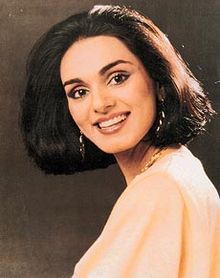
Neerja Bhanot and the spirit of humanity


Neerja Bhanot (1963 – 1986) was a flight purser for the now-defunct airlines Pan Am. She was an ordinary girl from an ordinary middleclass family based in Mumbai. Her twenty-three years of life was ordinary too, except for the last 17 hours, when she showed amazing courage, compassion for others, presence of mind, and absolute, unbelievable selflessness. 

Neerja was born to Rama and Harish Bhanot, a journalist, in Chandigarh. After she completed Standard 5 in Chandigarh, her family moved to Mumbai. Besides studying in college, she started working as a model too. She had an arranged marriage in 1985 and joined her husband in the Gulf. Unfortunately, like thousands of Indian males, her husband turned out to be a scoundrel who tortured her for dowry. Her marriage survived just two months. Back home, she applied for and got a job as an air hostess with Pan Am. She went to Miami to train as a flight attendant, but came out of the training as a flight purser. The Pan Am authorities had spotted her qualities with great prescience, as later events would prove when she saved the lives of a few hundred people.

On 5 September 1986, two days before her 23rd birthday, Neerja boarded the Pan Am Flight 73 in the small hours in a dark and sleeping Mumbai. She was the head of the in-flight staff when – two hours later – the aircraft was hijacked by four Palestinian terrorists from the Abu Nidal group just before its take-off from Karachi. The plane had 340 passengers. The terrorists wanted to fly to Cyprus and get some of their fellow criminals released from jail there.

And that’s when an utterly asymmetric struggle began between ordinary unarmed passengers and crew on one side, and four ruthless terrorists armed to their teeth on the other. And in this struggle, if I may say so, the people on the side of humanity was led by a 23-year-old girl, Neerja Bhanot.

As soon as Neerja realized that the four men wearing Karachi Airport Security uniform were actually terrorists, she alerted the cockpit. And the all-American cockpit crew of the pilot, co-pilot, and flight engineer, following Pan Am protocol, left the aircraft through an emergency overhead hatch. I recall that when I read this in 1986, I thought this was an act of unbelievable cowardice and the protocol was stupid and irresponsible. My thought was perhaps natural for someone who had grown up with stories that say the captain is always the last man to leave a sinking ship. But the point could be debated, and let’s move back to the story.

Neerja, being the senior-most cabin crew, had to take charge of the aircraft. The hijackers instructed her to collect the passports of all the passengers. The idea was to put pressure on the USA by identifying and possibly killing Americans on board one by one. Neerja had guessed the hijackers’ intention and saved dozens of American lives by simply hiding ALL the American passports – some under seats and some down a garbage chute. Clearly, this was the first of the several huge personal risks she took to save the passengers. She would surely have been tortured and killed if the trick was found out by the terrorists.

During the seize, one cabin attendant, probably Neerja herself, hid a page of the Flight Manual that described how to open an emergency exit and asked the passenger sitting next to it to “read the magazine carefully.” He did, and this saved some lives hours later.

After 17 hours of stalemate, the aircraft was plunged into semi darkness as the auxiliary power supply ran out and the emergency lights turned on automatically. The nervous and frustrated hijackers opened fire and set off explosives.

The man sitting next to the emergency exit managed to open the door, but couldn’t activate the slide that would help passengers deplane. Yet, some of them jumped off the door at a height of 15 feet above the tarmac.

Neerja opened another door, flung open an emergency chute, and assisted passengers from the aircraft to get off.

She could have been the first to jump off when she opened the door but …

She decided to stay back and help others. Like a real hero, she helped elderly passengers to leave the plane, while every passing moment brought her closer to her own death. And she was shot from behind while shielding three children from a hail of bullets and certain death.

From a total of 379 (359 passengers and 20 crew), 20 got killed, but 359 survived thanks mainly to Neerja. One of the children, then aged 7, is now a pilot with a major airline. He says Neerja Bhanot has been his inspiration and he owes every day of his life to her. Neerja was recognized internationally as "the heroine of the hijack" and posthumously received Ashoka Chakra, India's highest peace-time gallantry award.

And it was not Neerja alone, as the passengers looked death from close quarters, they too showed tremendous courage, compassion and support for fellow humans. A musician Nayan Pancholi who was in that flight has written in India Today TV’s online edition: “That day, nobody saw any religion, caste, or creed in each other. That day, we saw each other as humans and wanted to help each other and save each other’s lives. It's as simple as that in end.”

*

Let’s now move on to the film which is based broadly on this storyline. A similar narrative can also be seen on Wikipedia and elsewhere. However, some of Neerja’s colleagues in the flight have said this story is more fictional than real. Their point is simple, it was not Neerja alone, but every member of the crew who showed tremendous courage under stress. Maybe they are right, maybe they have a point. But on the Net, they are being abused squarely in high-decibel filthy language and kicked in different parts of their body for being – believe me – “unpatriotic”! Who says India has become intolerant?

And that is the reason I would salute the makers of the film including the director Ram Madhvani. With many other Bollywood film makers today, this film would have been subtly anti-Muslim and crudely anti-Pakistan. But the film is neither. Check these scenes.

When an officer tells the head of the Karachi Airport that there are 44 Pakistanis on the flight, the boss reacts angrily: ‘Do you want me to save the 44 Pakistanis and say “sorry” to the rest?’

In another scene, a man, who looks very much like a Muslim, is seen pushing an American passport under the seat.

For this reason alone, the movie Neerja is worth watching. In the ultimate analysis, even if the plot of the film is partly fictional, it tells a story of the human spirit, and of human values that come to surface when people are face to face with a deadly enemy, be it terrorists or be it floods.

Kolkata / Thursday, 25 February 2016
(Pictures courtesy the Wikipedia)

Tuesday, 1 December 2015

Aamir Khan must go to Pakistan


According to Merriam-Webster, a kangaroo court is a “mock court in which the principles of law and justice are disregarded or perverted.”

Just as wild mobs in parts of India lynch men suspected to be thieves, or burn helpless old women suspected to be witches, just as khap panchayats brutally murder young couples for having married outside their castes, over the last two days, lots of educated Indians who use the Internet – including people I know and respect – have passed their judgement on Aamir Khan because of something he said on 23 Nov in an interview. Let’s see what three kangaroo court judges have said. (These are random samples taken from thousands of similar views most of which are more vitriolic and a lot of which are in unprintable language):

  • ‪#‎AamirKhan‬ requesting tolerable AK to move out of this intolerant country where he was reigning since 3 decades (sic.)
  • Ya please go PAKISTAN, MR #AamirKhan (sic.)
  • #AamirKhan Don't spread COMMUNAL atmosphere in my India and YES, YOUR STATEMENT IS TOTALLY COMMUNAL.

It’s quite possible that many of these people haven’t taken into account Aamir’s astounding contribution to the Indian society, or even cared to read his entire statement on intolerance. First, let’s look back to what he has done for his country. He is not just another celebrity actor. He has contributed hugely to the Indian society over three decades. In this respect, he stands out tall and alone. Besides masala films, Aamir Khan has consistently chosen to act in films with a strong social message, e.g., Mangal Pandey: the Rising, Rang de Basanti, 3 Idiots, and so on.

Let’s ignore everything else except just two of his films and a TV talk show. He has produced and acted in Lagaan and Taare Zameen Par. The second movie was also directed by him. And he brilliantly hosted Satyamev Jayate, a TV talk show, between 2012 and 2015.


Lagaan (Taxation) was a film that introduced millions of post-independence Indians to the violence and injustices of colonial India. It was not history, but carried the essence of the history of colonialism beautifully.

Taare Zameen Par (Like Stars on Earth) has educated Indians about autism – and has perhaps saved tens of thousands of dyslexic children from ridicule and lack of empathy. Admittedly, the solution shown in the film was simplistic, but we’re talking about its impact on the society, not other aspects.


About Satyamev Jayate (Truth Alone Prevails), Wikipedia writes:
The show focuses on sensitive social issues … in India such as female foeticide, child sexual abuse, rape, honour killing, domestic violence, untouchability, alcoholism, and the criminalization of politics.
The first season of Satyamev Jayate saw responses from viewers in 165 countries, including Djibouti, Seychelles, Sierra Leone, ... and Papua New Guinea. A sum of Rs.22.3 crore was received as donations by the NGOs featured on this season. The second season was watched by 600 million Indians. The causes raised in the second season were supported by over 30 million people and the season generated more than one billion impressions online.
To put it simply, what Aamir Khan has contributed to India, his detractors won’t be able to match even if they lived 500 years. And yet, we, peanut-munching, chai-sipping Indians without a sense of history but with access to the Net are so quick to rubbish this wonderful individual.

You can read detailed excerpts of the interview in Indian Express, 25 Nov. Two days before, at an event hosted by the same newspaper in New Delhi, Aamir Khan didn’t refer to Dadri, where a mob lynched a 51-year-old man and grievously injured his son because they suspected the family had consumed beef. Neither did he refer to the prime minister, but said, “Often, on television debates … BJP that is ruling right now, is accused of various things. They say, ‘But what happened in 1984?’ But that doesn’t make right what is happening now. What happened in 1984 was disastrous and horrendous, but whenever there is a violent act, when an innocent person is killed, be it one or in large number, that’s very unfortunate. And these unfortunate moments are the ones when we look towards our leaders to take a strong step … to make statements that are reassuring to us as citizens of this country. I also feel a sense of insecurity. There is a sense of fear.”

Let’s recall that two weeks after the Dadri lynching, our globe-trotting PM found the time to describe the event as ‘unfortunate’, and that too, after the President prodded him subtly.

Answering a follow-up question, he said about his wife, “Kiran and I have lived all our life in India. For the first time, she said, should we move out of India? That’s a disastrous and very big statement for Kiran to make to me. She fears for her child, she fears what this atmosphere around us will be, she feels scared to open the newspapers every day.”

Responding to a question from the audience about the link between Islam and the recent Paris attacks, Aamir said he didn’t regard any terrorist claiming to be acting in the name of Islam as a Muslim, “He may feel he’s doing an Islamic act but as a Muslim I don’t feel he’s doing an Islamic act,” said Aamir.

*

Has Aamir Khan said anything against Hindus or Indians? Has he said anything about going to Pakistan?

Does he not have the right to express his fears in “tolerant” India? Are his fears unfounded? Please don’t forget that he lives and works in Mumbai, where everyone, from Karan Johar to the Bihari porter, is scared of the two factions of a rabidly communal Maratha Hindu outfit whose writ runs on many matters from how to write signboards to who can sing or play cricket there. Are we morons who have forgotten what happened to a man called Maqbul Fida Hussain, who was no less a celebrity than Aamir Khan? No Dear Reader, even Aamir Khan can feel unsafe.

Or are the detractors saying Aamir is actually not scared, but is pretending to be scared? Can any sane person – after going through his public record over the last three decades – believe that Aamir is saying all this just to embarrass the government of the day?

Instead of throwing mud at him in the virtual world and blackening and burning his posters in the real world, can we not stop and think if there is any reason for even such an eminent person to feel insecure? And if he does, what is going through the minds or ordinary Muslims (and other minorities) in far corners of India where law and order is just a concept, not a reality?

Ironically, the thousands of Indians who are abusing Aamir Khan today in the vilest language are just proving his point – minorities in India have every reason to feel threatened today.

Kolkata, Wednesday, 25 November 2015

Friday, 26 October 2012

Chakravyuh


King Henry II and Thomas Becket, the head of the Anglican Church were good friends once. Becket, who was a trusted aide of the King in his conflicts with the Church, became the Archbishop of Canterbury in 1162 possibly with the King’s help. Henry might have hoped that Becket would continue to put the royal government’s interests first, rather than that of the church. But over time, Becket transformed into an ascetic and changed side. He was killed by Henry’s followers in 1170.

This true story inspired a Broadway play written by Jean Anouilh: Becket or the Honor of God, and later, a movie, Becket in 1964. In the movie, Peter O’Toole played Henry II and Richard Burton, the Arch Bishop.  In Namak Haram (1973), the protagonists were Amitabh Bachchan and Rajesh Khanna. Industrialist Amitabh Bachchan sent his friend Rajesh Khanna as a mole into the trade union of the workers of his company. But instead, he turned into a genuine trade-unionist and the friends fell out. Both the films were hugely successful commercially. This time-tested formula has been used yet again by Prakash Jha in Chakravyuh to tell the tale of the Maoist movement that is raging in India today.

Arjun Rampal is the Superintendent of Police of Nandighat, where impoverished people shunned by a Shining India barely manage to live. Buried beneath their feet is an enormous wealth of minerals that attracts mining companies, leading to their ouster from the land they have lived on for centuries. Kabir Bedi is the head of the Mahanta group, a thinly veiled allusion to Vedanta, the company that has wreaked havoc in the forests of Odisha. Mahanta is trying to evict people from 256 villages to expand his project. And to do that, he thinks it is legitimate to employ paid hoods. The state government is in cahoots with him, but the government’s writ doesn’t go beyond the towns. Maoists are in control of the countryside.  The SP reluctantly sends his friend Abhay Deol into the ranks of the Maoists to sabotage their movement.

On the other side, Manoj Bajpai is the ruthless Maoist boss who terrorises the very people he is trying to liberate. One of Bajpai’s lieutenants is a woman from Jharkhand who falls for Abhay Deol head over heels. And Abhay starts looking at things from a new perspective. 

The film has all the ingredients of a mainstream Hindi film: sex, violence, and of course, song and dance, including an “item number” by Sameera Reddy backed by an ear-rupturing song by Sunidhi Chauhan. In contrast, the hero and heroine are strangely asexual, a throwback to the 1950s. And in the end, Abhay Deol and his love interest’s personal tragedy supersedes the tragedy of millions of people.

Despite the obvious fault-lines, this is a remarkable film of the recent times because of two reasons.

Firstly, the scale of the production is gigantic. The vast hills and forests of Central India and the millions that live under the constant fear of contractors, forest officials, and policemen have been represented with an authenticity that we hardly expect in Hindi pictures. And obviously a film maker needs courage to show bulldozers razing tribal houses or to name Tata-Birla-Ambanis in a song on “mehangai”.

Secondly, and more importantly, the story tells us how it all began, the ruthless exploitation of the tribal population, which has only worsened since independence. It tells us the story of the mining barons for whom dislodging people from their homes and livelihood is as incidental as felling trees. It also tells us the story of Maoists who put a small price tag on human lives. And this has been narrated from a remarkably neutral viewpoint.

I saw the picture at a multiplex a day after its release, with 28 out of the 30 rows vacant. Two men sitting next to me left at half-time to underline the fact that for the well-heeled urban middleclass, the emaciated people of Dantewada, Keonjhar, or Lalgarh are as distant as inhabitants of a different planet. The point is: is there any point of making films like these? I think there is.

Kolkata / Friday, 26 October 2012

Friday, 9 September 2011

The dream is over


Meri prem kahani khatam huyi
Mera jeevanka sangeet gaya
Mera sundar swapna beet gaya

My love story has come to an end, 

So has the music of my life. 
The beautiful dream is over.
In the no-man’s land between boyhood and manhood, we had only boys for company. Having studied in a same-sex school and given the social norms of the 1960s, my friends and I had hardly any feminine companionship outside family. So we often fell in love with film actresses. In The picture of Dorian Gray, Oscar Wilde said that everyone falls in love with a film star at some time or other. I guess we did so once too often … with the beautiful sexy heroines of Hindi films, where there was an abundance of beauties. 

When we began watching Hindi films – of course on the sly – Madhubala and Nargis, the two most beautiful women to have ever walked this earth were no longer on the scene and Meena Kumari, who would die in 1972 because of alcoholism, was past her prime. But those who were there were no less ravishing. The reigning divas were Waheeda Rehman, Nutan, and Sadhana Sivadasani. We didn’t ignore the lesser stars either – like Nanda, Saira Banu, and Asha Parekh. Each one of them was beautiful in their own way and radiated charm and spirit. And one cannot forget the vivacious Anglo-Burmese actress Helen, who was the permanent cabaret dancer in all Hindi films of the sixties! 

Describing feminine beauty has been a challenging task for writers over the ages. Only the best in the business have made a decent job of it occasionally. The lesser ones have made a hash of it regularly. Therefore, instead of trying your patience, Dear Reader, I’ve pasted some photographs above. In the unlikely event that you don’t recognise them, they are, from the left: Nanda, Waheeda, Helen, and Sadhana. 

I fell in love with them and a few others regularly, one at a time, depending on who was the heroine of the last film I’d seen:  Sadhana in Mera Saya, Nanda in Ek phool do maali, Waheeda in Guide, and so on …. They exuded charm and sexuality and filled my personal sky with a pleasant amorous glow. (Incidentally, while reviewing Mera Saya, a a film critic of The Statesman chose to disambiguate that the film had  nothing to do with women's underclothing!) 

A few days ago, a friend forwarded a recent picture of these beautiful women. This is how they look now. Believe it or not, these are the same persons, Nanda, Waheeda, Helen, and Sadhana.


It hurt that my former lovers look so pitiably unglamorous now. What the picture shows are not just ineluctable signs of aging, but something much more complex. In it, Helen looks spritely, although a touch overweight. Waheeda is barely passable, but not a shadow of her past. The other two beauties of yore have turned into worse than overworked working-class women, ravaged by time, devoid of beauty or spirit. Life would have taken a heavy toll on them. I couldn’t help reflecting that many of my female acquaintances of their age, who are ordinary middleclass class women, are a lot more beautiful today. 

The present appearance of the past stars possibly reflects the stormy lives some of them have lived. Underneath a world of glamour and wealth, there would be stories of broken relationships, exploitation by male colleagues, loneliness, incompleteness, and alcoholism.  Far from the madding, cheering crowds, they would have had to deal with the haunting silence of personal tragedies. 

Of the four women, Helen, who is Salman Khan’s step mother, seems a happy woman. What about the rest? 

There were many suitors for Nanda, but she turned them down. In 1992, a middle-aged Nanda got engaged to film director Manmohan Desai, who committed suicide in 1994 by jumping off his own building. Nanda has remained unmarried. Today, she lives in Mumbai and is accessible only to family and close friends. 

Sadhana married film director R.K. Nayyar in 1965. The couple had no children. Since her husband’s death in 1995, she has been living alone in Mumbai as a tenant in an apartment building. In 2011, she had to complain that a builder was threatening her to vacate her ground-floor flat. A sad fall for a diva to an ordinary urban middle-class existence. 

Guru Dutt, who made brilliant films within the parameters of popular Indian cinema in the 1950s, was born Vasant Kumar Shivashankar Padukone. His tumultuous relationships with a Bengali singer, the numero uno of the time, Geeta Roy, and the Urdu speaking Waheeda Rehman from Hyderabad, destroyed Geeta. 

Since her marriage with Guru Dutt in 1953, Geeta Roy has been known as Geeta Dutt. A friend, Abhijit Basu, writes on Facebook (17/07/2018): "Happiness is ephemeral. Shortly after the wedding, Guru Dutt barred his wife from singing in films other than his own productions. Geeta was then at the height of her creative prowess." 

But the arrangement worked for some time. The hugely talented husband-wife team produced some of the finest Hindi songs, but their paradise was to be lost soon. In 1956 a little-known Telugu actress Waheeda made her Hindi debut in Guru Dutt's C.I.D. Dutt, who was extremely disciplined in his professional life, was thoroughly undisciplined in his personal life. He smoked and drank heavily and kept odd hours. Dutt’s affair with Waheeda drove Gita Dutt to alcohol.  Guru Dutt didn’t discover bliss in infidelity either. He committed suicide in 1964, reportedly in his third attempt, after Waheeda had drifted out of his life. 

It’s poignant that Geeta lent her voice to Waheeda who sang some of the achingly romantic songs to Guru Dutt on screen. (The song used as the epigraph of this article is not one of them.) 

Geeta Dutt was shattered after the death of her estranged husband. By then, she had destroyed her career and had been virtually out of work. Her attempt to resurrect her singing was only partially successful. She, like Meena Kumari, drank herself to death. She too died of cirrhosis of liver in 1972, four months later. 

Life could not have been easy for Waheeda Rehman either. Her second film with Guru Dutt, Kaagaz ke phool was about a successful film director's decline after he fell in love with his lead actress. Over time Waheeda drifted apart from Dutt, although they continued to work together into the 1960s. She played the second female lead in Sahib Bibi Aur Ghulam "under some strain". They broke up after the film failed to get critical acclaim at the Berlin Film Festival in 1963. Guru Dutt was to die soon. 

A decade later, Waheeda married a relatively unknown actor, Kamaljit and the couple had two sons. Kamaljit too died in 2000. 

Whatever I have written above has been sourced from the Internet. Part of it may be inaccurate, but there is no denying the fact that Waheeda, Nanda, and Sadhana lost their lovers/husbands early. And their faces are the best testimony of the struggles they have gone through. It is sad that the women who kindled warmth and desire in a million hearts had to live with heartbreaks and lack of warmth.

They remind me of a line of the Bengali poet Sukanta Bhattacharya:  You are like those who turn on the street lights every evening, but have to live through long dark nights in their own homes.


Friday, 09 September 2011
Updated on 22 July 2018

Friday, 11 February 2011

One city, many separate journeys


While walking through crowded roads, bazaars, or fairgrounds, I have often thought any stranger around me could have been one of my best friends. Only a few amongst the multitude actually become our acquaintances, and fewer still share their lives with us. Among those who don’t, there are surely many wonderful souls we would love to meet. On the other hand, the person we cannot think of living without could have been a perfect stranger to us. Call it Fate or chance, our relationships are shaped by an invisible hand over which we have little control. How wonderful it would be if it were otherwise!

Imagine the story of a young village girl in the film Dhobi Ghat, who has just got married to someone in Mumbai. She meets the city, its crowds, incessant rains, and the sea with wide eyes brimming with happiness as she looks forward to her new life with a man who has all the trappings of “success”, like a nice flat and a video camera. Before she has time to fall in love with her man, she falls in love with the city, and her people. She feels sorry for her domestic help when the latter’s shanty gets flooded, quite unaware of the disaster that is in store for her. What begins as loneliness with her husband being away on work turns out to be an abyss after she discovers that he has just been using her. The happy smile in her eyes turns into painful sadness. She has access to the phone, but doesn’t inform her parents about her predicament. We don’t know why, but can guess.

It doesn’t matter whether the girl is Yasmin or Tabassum or Geeta, there is nothing new about her story. What is new is that – quite by chance – Yasmin shares her story with a perfect stranger, Arun, to the very end. Arun, a successful painter and a divorcee, has his own lonely furrows to trudge. He is deeply disturbed by Yasmin’s story, but is in no position to help her.

Another young girl Shai is new to Mumbai. She too discovers the city, but her journey couldn’t have been more different than Yasmin’s. If Yasmin’s helplessness takes us back to the past, Shai, an investment banker based in New York, is an alien visiting us from the future – confident, and free from the shackles that held back our women for centuries. Don’t both the past and the future live in the present?

Having come to Mumbai on a sabbatical, Shai spends her time taking pictures of the different moods and manners of the city. The photographer and the painter, both of whom have the city at the heart of their work, discover a kindred soul in each other. As the film begins, Shai has a fling with Arun, but their relationship remains undefined and inchoate till the end.

Also, Shai, brought up in an environment where a manual worker is not automatically considered socially inferior to a painter or a banker, makes friends with a dhobi, Munna. For Munna, the principal difference between his village in Darbhanga and Mumbai is that in the city, he doesn’t feel hungry all the time. He is a dhobi by day, a municipal “rat killer” by night, and an aspiring film star at heart. Munna’s second occupation is unknown to Shai till the end, and so is the fact that at his station in life, it would not be unnatural for him to be friendly with drug peddlers, just as for Shai, it wouldn’t be unnatural to have junkies as buddies.

Munna is drawn towards Shai, but has the sense to realise the hopelessness of such a relationship. The unlikely triangle of Shai, Arun, and Munna has all the usual spices of sexuality, joy, and jealousy. And as the story unfolds, the city looms large in the background. In one scene, a few days after the Ganesha festival, Arun, trying to retrace Yasmin’s journey, is on the seashore. Like her, he too is alone. As he looks out, a tiny plastic Ganesha drifts towards him. Shorn of the pageantry, the god of wealth and success seems pitiably lonesome when he returns to Arun as the symbol of the solitude that is at the heart of city life.

Thankfully, when the film ends, all the stories don't. There is a hint of Munna giving up his dreams about Shai, but we don't know where she and Arun end up. Perhaps it is not necessary. It is the journeys that are important, not the destinations ... not only in literature and films, but in life in general.

That Aamir Khan would bring out the shades of Arun’s character with all the subtlety at his command is no wonder. It is the other three main actors whose brilliance amazes us. Among the audience, those who were old enough to see films in the 1970s and 80s are likely to form an emotional bond with Prateik as Munna, because he is the son of Smita Patil, one of our most talented actors ever, who died at the age of thirty in 1986.

The film has a fifth principal character, the city of Mumbai. Grandeur and filth, selfishness and warmth, liberality and Shiv Sena, New York and Darbhanga, Mumbai has them all. It has a character like perhaps no other city in this country has. Apart from presenting a fine film, debutant director Kiran Rao would make many of us fall in love with the city all over again. Not a mean achievement, one feels.