If you have a problem, fix it. But train yourself not to worry, worry fixes nothing. - Ernest Hemingway

Monday, 14 September 2020

Illiberal India


According to the Telegraph e-paper today (14 September 2020), 80 people are murdered in India every day. That is, about 29,000 homicides are committed in our country every year.

One of these happened in Bengaluru on 5 September 2017, when a small-built 55-year-old woman, Gauri Lankesh was shot from behind by two men on a motorcycle when she was about to enter her home after the day’s work. Until that afternoon, she had been editing and publishing a Kannada weekly: Gauri Lankesh Patrike.

It calls for infinite cowardice to murder an unarmed woman in the crepuscular darkness of the evening. But that is not why her murder shook the nation.

Gauri Lankesh was the fourth victim in a row after Narendra Dabholkar, Malleshappa Kalburgi, and Govind Pansare. Each one of them was a rationalist who protested against the deep-rooted superstitions of the Hindu religion and promoted a scientific way of life. It has now been established that each of them was killed for their belief by some extreme Hindu right-wing politico-religious Taliban-style extremists. The same killers apparently murdered Kalburgi and Gauri, using the same gun, as noted by forensic experts.

Gauri was a crusader for the values enshrined in Lingayatism, founded and propagated by the 12th-century philosopher and statesman Basava in Karnataka. The original Lingayat sect was unbelievably egalitarian, and had as their preacher people from the so-called lower castes, even prostitutes. It was a revolutionary movement which had to be suppressed by the upper-caste Hindus through much bloodshed, but the flame could not be extinguished.

However, in the recent years, in the rising time of Brahminism among Hinds, Lingayats have been absorbed as another sect within the dominant Hindu establishment and their original egalitarian values have been buried. Gauri opposed this construct.

Gauri Lankesh was also a political activist who began her career as an English language journalist, but later, relentlessly fought the rise of Hindutwa which has been destroying the secular structure of India. A divorcee who never married again, she was a mentor to several young people who an average Indian looks up to as their future saviours. Gauri adopted several of them as her children, including Kanhaia Kumar and Sheila Rashid.

The three bullets that pierced Gauri’s slender body was fired by two cowardly men, but they were not alone. A gigantic project that aims to marginalise Muslims, Christians, and Dalits, that has been trying their best to convert India into a Hindu Pakistan was behind the men holding the trigger, although the connection is hardly clear or easily discernible.

Chidanand Rajghatta, ex-husband and lifelong friend of Gauri Lankesh, exposes the connection through painstaking research with the help of his deep understanding of the situation in Karnataka and India by virtue of being a top journalist.

The story of their personal lives meshes neatly with the recent history of India and the changes we are wading through.

Please read this book. It will help you understand the India of the 21st century better.

14 September 2020

Sunday, 6 September 2020

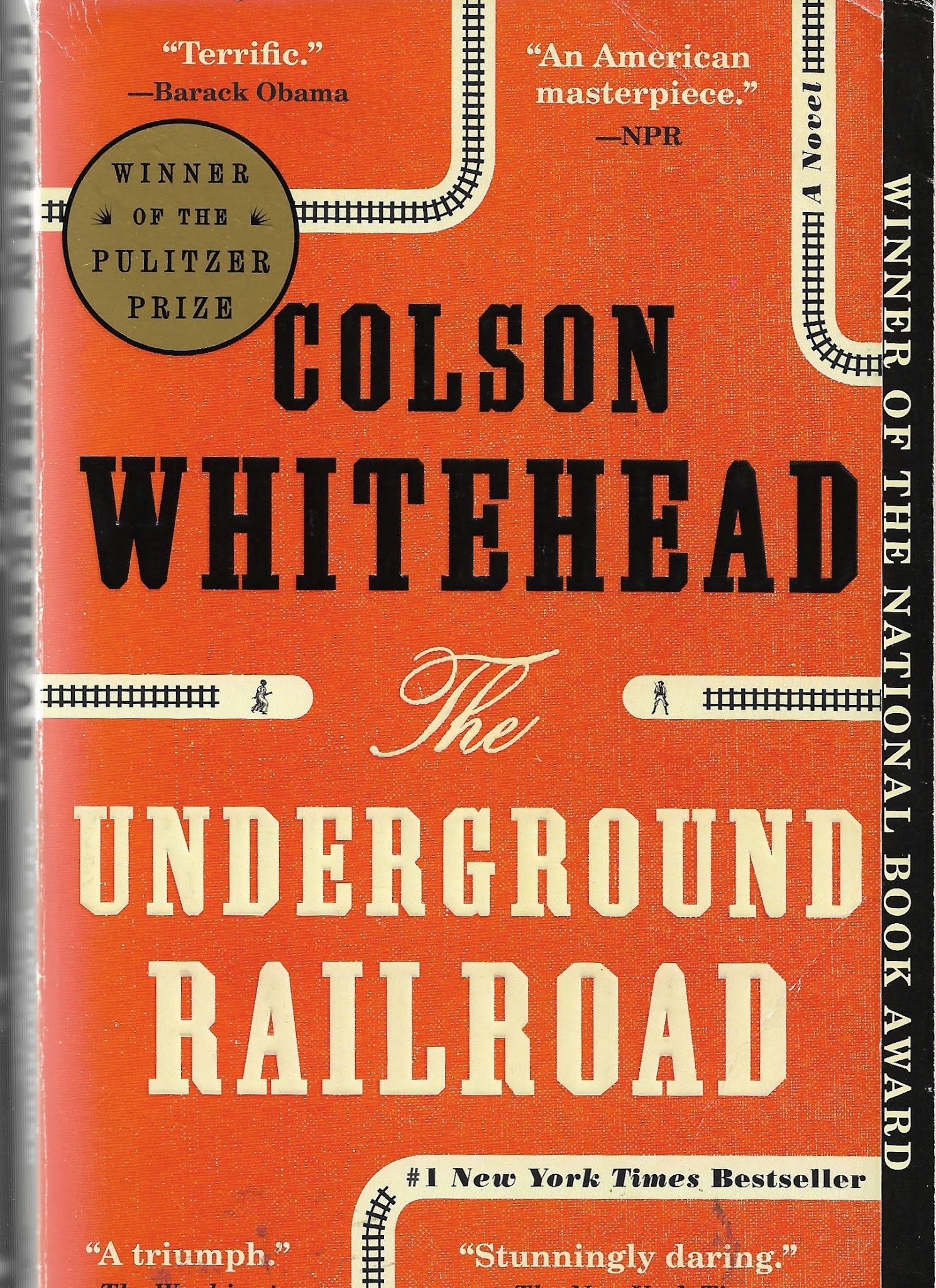
The Underground Railroad


Until my friend Chitrita gave me the book, I hadn’t heard the name of Colston Whitehead. Neither had I come across the string of words Underground Railroad. I will come to Colston Whitehead shortly, but before that, let me describe what “underground railroad” means in the context of American history.

Chattel Slaves in America: Men, women, and children kidnapped from Africa, ferried across the Atlantic chained to the hull in dark holds of ships, and sold at port-town markets to white American farmers. Besides suffering the ignominy of being treated as personal possession, they lived a life of such relentless hardship and pain that very few would live to become old.

Young women were also used as producers of more slaves; they were allotted to male slaves with strong physique, unless they produced mulatto babies as consequence of rape by owners or their overseers. Children, routinely taken away from mothers, were made to work in fields as soon as they were able to walk. Rape of and other sexual brutality on women were so common that we hardly see black Americans who are really black. When Alex Haley, the author of the 1976 novel Roots, The Saga of an American Family went to the heart of Africa in search of the hamlet from where one of his eighteenth-century forefathers, Kunta Kinte had been kidnapped, Haley was shocked to see the unblemished blackness of the African skin there.

For the slightest lapse, real or perceived, slaves were subjected to often sadistic torture by their white 

owners and their overseers. Lashing with a rope whip with nine notches – disingenuously named cat-o’-nine-tails – was the least punishment. The worst was reserved for people who had tried to run away and got caught. For a man, it could be cutting off his penis, shoving it into his mouth, stitching his lips and letting him die a slow death accompanied by even more torture, as his white owners and their guests watched the spectacle while having dinner in the open. For a woman runaway, it was so brutal that I find it difficult to type out.

Given the life they lived, many slaves fled their masters every year despite the humongous risks involved. On the other hand, there were professional “slave catchers”: white men who made a living out of tracking down and bringing back runaway slaves to their masters, sometimes from thousands of miles away. It was possible to recapture fugitive slaves even from the North American states where slavery was illegal, thanks to the Fugitive Slave Law of 1793 which granted immunity to slave catchers and compelled local officials to assist them. As the law required scant documentation to claim that a coloured person was a fugitive, slave catchers also kidnapped free Blacks, especially children, and sold them into slavery. The Wikipedia (accessed on 31 August 2020) says:

The law deprived people suspected of being slaves the right to defend themselves in court, making it difficult to prove free status. In a de facto bribe, judges were paid a higher fee ($10) for a decision that confirmed a suspect as an enslaved person than for one ruling that the suspect was free ($5).

However, the world is never devoid of people who would help their less fortunate brethren. Lots of people unknown to each other, both white Americans and free African Americans, collaborated to set up a network of safe houses and secret passages that were used to transport slaves from the southern states of America. Their destination was either British North America, most of which is presently Canada, or the northern American states which were more tolerant towards “negroes” in varying degrees, particularly certain cities like Philadelphia and New York, the latter being a “factory of anti-slavery sentiment.”

The “Underground Railroad” was neither a railroad, nor was it underground; it was a metaphorical name given to the network narrated above. The “railroad”, which did not have offices or official documents, began in the late 1700s and grew steadily until the American Civil War (1861-65). “One estimate suggests that by 1850, 100,000 enslaved people had escaped via the "Railroad".” [Wikipedia, accessed on 31 August 2020]

What if such a subterranean railroad actually existed in the mid-nineteenth century? Surely, it could only be in a fiction? In his Pulitzer-Prize-winning novel The Underground Railroad, African American writer Colston Whitehead (born 1969) takes his readers in a reverse journey from a metaphor to the imagined reality of an impossible railroad with the inviolable truth of bondage hanging as a constant backdrop.

It is the story of Cora, a third-generation slave born in a cotton farm in Georgia who was at the cusp of womanhood. Cora, who didn’t “have” a father like many other slaves, also had the misfortune as she had been abandoned by her feisty mother who ran away. Deep within, Cora nursed a desire to trace her mother and confront her, but she did not seriously consider the option of running away, which wasn’t much of an option in any case.

Yet, one moonlit night, she escapes because of a combination of circumstances and a newly recruited slave, Caesar who had befriended her. Caesar was like no coloured man Cora “had ever met,” because he could read and write, a fact which he concealed for his life, as having even an elementary education was a crime for a slave and it would attract severe punishment. Cora and Caesar don’t get into a physical relationship but continued as comrades in a shared quest for freedom.

They outrun and outwit their pursuers, manage to get the better of a vigilante group, and reach a shelter offered by a stooped grey-haired white Pennsylvanian, Mr. Fletcher. Fletcher, who abhors “slavery as an affront before God”, smuggles them out to the nearest railroad station, taking enormous risk – like every other person who collaborates with the railroad, irrespective of the colour of their skin.

After narrowly winning the first round against the southern white man who “was spat from the loin of the devil ….” Cora and Caesar climb down a steep staircase hidden beneath a trapdoor to a platform of the Underground Railroad. Their real journey begins.

Cora experiences “civilised” white people in South Carolina who do not brutalize her body, but are equally keen to own her mind, until the veneer of civilisation is flaked away one evening in a sudden burst violence that separates her from Caesar.

In North Carolina, after Cora sees miles of dead blacks hanging from trees, a kindly and extremely scared white man and his wife hide her and her chamber pot, on an airless platform in their attic, where Cora continues to nurse her dream of meeting mother. From a hole in the wall of her hideout made by an earlier fugitive, Cora watches a town square and a town without a black soul except when one is ferreted out of a safe haven like Cora’s, and is savagely done to death along with the white family that sheltered them, loudly cheered on by an ecstatic crowd. Cora stays there for months, until her luck runs out, and her hosts’.

Cora is back in shackles, this time, not metaphorically. She is chained to the floor of a wagon, perhaps closing a circle that began with her grandmother’s journey across the Atlantic.

As she heads towards a terrible future, her journey, wildly oscillating between despair and hope, traces the changing landscape and people of different southern states while America moves towards an inevitable bloodbath and Civil War.

Colson Whitehead’s novel, a story of enormous courage and resilience, resonates in our time as it opens our eyes to the depths people can climb down when hatred captures the mind of an entire community. Using a gruesome chapter of American and world history as the backdrop, Whitehead retells – in captivating prose – the story of tribalism and violence that are innate to humans.

The story makes us think if our species has a future.

Colson Whitehead / The Underground Railroad / First Anchor Books edition, 2018 / www.anchorbooks.com / Copyright © 2016 by Colson Whitehead

Monday, 31 August 2020 / 1453 words


Tuesday, 25 August 2020

Let’s Celebrate Prashant Bhushan’s Punishment

It is 20 August 2020 today.

A few days ago, the highest court of India decided that Mr. Prashant Bhushan has, in fewer than 280 letters of the English alphabet, humiliated the august institution so much that the honourable judges cannot carry out their work of dispensing justice with dignity. How sad!

The court has also decided that Bhushan be punished; the quantum of punishment will be announced today.

Mercifully, the law of the land doesn’t allow cutting off the tongue that lashes out against honourable judges. Or giving the owner of the tongue 50 lashes in a public square. So, the disturbed judges will have to be content with imposing a fine or sending the man to jail. They may even show him forgiveness perhaps, cowed down by the deluge of protests from all over the world. Who knows?

Personally, I believe Mr. Prashant Bhushan, who has spent his life as a brilliant civil rights lawyer and exposing corruption in high places (including the 2G and the coal block allotment scams during UPA-2) will be sent to jail today. I will be pleasantly surprised if he isn’t.

If it actually happens, I would feel sorry for him and his family, but I will also be extremely happy. Why?

Because it will tell us, with a sense of finality, that India today is in a situation that in many ways, is similar to our colonial past. That our hard-earned freedom has been usurped by a bunch of uneducated, cunning, ruthless people (mostly men) whose sole political capital is spreading hatred towards Muslims and Christians and creating a false fear among 82% of the population that the remaining 18% will somehow finish them off. Clearly, a lot of people have started believing in this bizarre proposition. In 1857, the British began colonising our land. Since 2014, the Sangh-BJP combine has been colonising our minds with their ideology of hate. They have sucked life out of our democratic institutions. They are extremely incompetent too. In just six years, they managed to destroy our economy even before the COVID-19 struck.

We have two options before us.

We can sheepishly accept a Hindu Pakistan, with its denial of democratic rights, muscular suppression of all dissent, bidding farewell to science and scientific approach to education, and ascendance of Hindu mullahs, all of which have been happening already.

Or we can choose to wage a new freedom struggle to reinvent our democracy and regain the values enshrined in the Constitution of India.

On which side will you be?

Maybe, unknown to you and me, a new freedom struggle has already begun to redeem the soul of our Constitution. Already, a large number of our finest men and women are in jail: from the 80-year-old poet Varavara Rao to the civil rights lawyer Sudha Bharadwaj, who gave up her American citizenship and many privileges and gave her life to help poor Adivasis in their legal battles against a repressive state in Chhattisgarh, to the young Pinjra Tod activists, who began their journey to obtain equal rights for girls in Delhi hostels, and went on to protest against the regressive Citizenship Amendment Act.

Just as India could not have become independent without Gandhi, Nehru, and Bose going to jail again and again, I don’t believe India will ever achieve freedom from these internal colonialists without Prashant Bhushan and many others going to jail.

In this new freedom struggle. 20 August 2020 might prove to be a watershed moment in our journey towards a new 15 August 1947.

Sometimes, gigantic historical events are foretold in one man's tale. Do you recall how the First World War began? Let us celebrate Prashant Bhushan's punishment!

Monday, 24 August 2020

An Ode to Death

 Here is my translation of the Bangla poem: মৃত্যু, তুমি Followed by the original >>>

Birendra Chattopadhyay


 (For my friend, Dr. Bhumen Guharoy)

It’s not true that Death doesn’t wait for anyone. Often          

 He is made to wait. He knows, ultimately, he’s going to win.                                  

But he has to accept minor defeats 

At the hands of the unbending willpower of human beings.

He has to concede. Humans know they aren’t immortal–

            yet, they pen poems, paint pictures, create music.


At times like these, waiting behind them, 

            Death slowly becomes impatient; loses his self-confidence.


Death! You must learn to be patient, give us time to prepare!

Give us time to learn – that your cold hands                           

Are no horror stories.

And then, keeping you ahead of us, we’ll begin our journey without a direction,

So that we can confidently tell our near ones,

‘Death is insurmountable, but neither did we lose the mach.’


(Translated on 24 August 2020)


মৃত্যু, তুমি

বীরেন্দ্র চট্টোপাধ্যায়

(ডঃ ভূমেন গুহরায় সুহৃদবরেষু) 


মৃত্যু কারও জন্য বসে থাকে না, কথাটা ঠিক নয়। মাঝেমাঝেই তাকে অপেক্ষা করতে হয়।

সে জানে, শেষ পর্যন্ত, তারই জিৎ। কিন্তু ছোটখাটো হার, মানুষের অদম্য ইচ্ছার কাছে,

তাকে মেনে নিতে হয়। মানুষ জানে–সে অমর নয়, তবু সে কবিতা লেখে, গান গায়, ছবি আঁকে।

মৃত্যু তখন তার শিয়রের কাছে বসে ক্রমেই নিজের ধৈর্য আর সাহস হারিয়ে ফেলে।


মৃত্যু তুমি সহিষ্ণুতা হেখো, আমাদের প্রস্তুত হতে দাও!

আমাদের অনুভব করতে দাও – তোমার শীতল হাতের স্পর্শ কোন ভয়ের গল্প নয়।

সেদিন তোমাকে সামনে রেখে শুরু হবে আমাদের অনির্দেশ যাত্রা

যেন আমরা মুক্ত কন্ঠে আমাদের আপনজনেদের কাছে বলতে পারি

‘উনি অনতিক্রম্য, কিন্তু আমরাও খেলায় হারিনি।‘