If you have a problem, fix it. But train yourself not to worry, worry fixes nothing. - Ernest Hemingway

Tuesday, 29 March 2016

Can we learn from this conservative politician?


John McCain, the Republican Senator from Arizona, famously lost to Barack Obama in the US presidential elections in 2008. I happened to be in the US during the elections and followed the debates as closely as I could. 

The Grand Old Party that McCain belongs to had just produced one of the worst Presidents in the American history, George Bush, besides the Iraq war and the financial melt-down that brought the entire world to the brink of a disaster. Like most human beings who were not insane, I detested the American Conservatives, I still do. 

But despite my inhibition about the party and the values that the GOP stands for, I couldn't but admire McCain as an individual. He had a simple, practical, down-to-earth approach to the issues and was infinitely graceful in defeat. And his background helped. 

Fighter pilot John McCain's plane was shot down in Vietnam. McCain, who survived the crash with severe injuries, was tortured even when he had been injured. He spent a long time in Vietnamese jails, and although he could have bought his freedom early thanks to his connections -- his father was, if I am not mistaken, a navy admiral and consequently a part of the ruling elite of the US. But John McCain refused to tread that path, didn't wish to leave his comrades behind in jail by exploiting the accident of his birth. 

So I was not surprised when I read this in the New York Times. It is a touching obituary for an ordinary American, who had been -- trust me -- a communist! 

Do we Indians, tormented by an at-times-violent tolerance-intolerance debate, have anything to learn from John McCain?

If you wish to read the article, please click on this link.

[Photo - Courtesy New York Times]

Kolkata / 29 March 2016

Friday, 25 March 2016

If you want to live in India, do you have to chant Vande Mataram?


As an Indian reader, what will you do after reading the headline of this story? Please tick one of the options in your head.

1.       I may or may not read it, but I know you’ve written yet another biased article against a government that is trying hard to take India ahead.
2.       Let me decide, but I don’t think it’s an important issue.
3.       I’ll definitely read it – maybe it contains information that I need.
4.       I might read it or might not – maybe I will come back to it if I don’t find anything interesting.
5.       I’ll move on to the next post. I couldn’t care less.

There are five kinds of Indians in India today – and your answer will perhaps tell you which category you belong to.

1.       People who care for India and support the government of the day or the ruling party or both.
2.       People who care for India but who believe nothing is especially wrong in the present time – we’ve had problems all along.
3.       People who care for India and are seriously concerned about the direction in which the present rulers are taking us.
4.       People who are otherwise preoccupied, who would think politics when they have free time, if any.
5.       People who think of the country or the nation or the state as an abstract entity: “I really can’t change anything, I don’t have a role in it. Why should I bother, let me watch the butterflies in my garden.” 

Dear Rader, I respect your right to have any of the above views or anything else that’s beyond my head, but I am writing this just to tell you why I think you MUST care about what’s happening around us.

Democracy is a story, the country is a story, the nation is a story, and so is the state. India functions as a liberal democracy because lots of people believe in the STORY of a pluralistic society consisting of many languages, religions, and faiths. In parts of India, e.g., Kashmir, people, at least a huge chunk of them, have stopped believing in the story and the Indian Democracy simply doesn’t work there.
… Kashmir valley, … the most densely militarised zone in the world, where half a million Indian soldiers (one to every four civilians) and a maze of army camps and torture chambers that would put Abu Ghraib in the shade are bringing secularism and democracy to the Kashmiri people. Since 1990, when the struggle for self-determination became militant, 68,000 people have died, 10,000 have disappeared, and at least 100,000 have been tortured. [Arundhati Roy in the Guardian, 10 Feb 2013]

While Kashmir and parts of the North East are a colossal tragedy, fortunately for us, the situation is entirely different across the length and breadth of India. We vote for different political parties, but we will never vote against Democracy. Most Indians have heard stories of alternative political structures – of Tamil Eelam, of Khalistan, of a totalitarian Maoist state. But we haven’t bought those stories because we believe that parliamentary democracy is a better story.

And the central part of this story is that every Indian has equal space and some rights that are enshrined in a bound volume called the Constitution of India. Freedom of speech and action – without harming others – is fundamental to our Constitution. I have the choice to be Hindu or a Muslim or an agnostic. I have the right to eat what I like, including beef and pork. I have the right to love my country – even if I didn’t, as long as I didn’t bother others, my constitution gives me the right to live with dignity.

We do not live in Hitler’s Germany, where one could be imprisoned or killed simply because one refused to chant “Hitler is Germany! Hitler is victory! Hail Hitler!”

Or do we? On 16 March 2016, the Maharashtra Assembly unanimously (BJP, Congress, NCP, et al) suspended Majlis-e-Ittehadul Muslimeen (MIM) MLA, Waris Pathan, after he said he would not chant “Bharat Mata ki Jai” (Hail Mother India) even if someone held a knife to his throat.

Incidentally, Pathan’s statement came in response to what RSS chief Mohan Bhagwat had said a week before: “Now the time has come when we have to tell the new generation to chant Bharat Mata ki Jai.”

In the Assembly too, BJP and Shiv Sena members shouted slogans like “Is desh mein agar rehna hoga, Vande Mataram kehna hoga (If you want to live in India, you have to chant Vande Mataram)”. [The Hindu 17 March 2016]

Reacting to his suspension, Pathan later said: “I love my country. I was born here and I will die here. I can never dream of insulting my country. Don’t judge anyone’s love for the country by just one slogan. Jai Hind, Jai Bharat, Jai Maharashtra.” So here, he is actually reciting “Jai Hind” although he refuses to say, “Bharat Mata ki Jay.”

I believe MIM is one of the worst political parties whose primary aim is to spread communal hatred among Muslims. But the finest legal brains in India say that our Constitution gives Pathan the right not to chant any slogan that the ruling party of the day, or their mentors want him to chant.

In the 1980s, some students were rusticated from a Kerala school because they refused to sing the National Anthem on the ground that they belonged to a religious group known as the Jehovah’s Witnesses and the group only sang in praise of the Lord and would not sing any other song. So the students were willing to stand up respectfully, but would not sing the anthem. The case came up in the Supreme Court and it reversed the expulsion in 1986.

In doing so, Justice O. Chinnappa Reddy noted: “Our tradition teaches tolerance; our philosophy preaches tolerance; our Constitution practices tolerance; let us not dilute it.”

Soli Sorabjee, a legal luminary and a former Attorney General has written:
"New-fangled notions of nationalism and patriotism have recently erupted. In substance, they equate patriotism with the chanting of certain words with the clear implication that those who do not do so are anti-national and unpatriotic. It must be remembered that nationalism is a mindset arising from spontaneous feelings of genuine affection for the country and its people. It cannot be manufactured by recitation of certain verses." [Indian Express, 20 March 2016]
And that brings us to the conclusion. India has remained a country despite pundits from all corners of the world predicting since 1947 that she would not survive as a political unit because of her wide diversities. India has survived not because everyone shouted ONE slogan, but because we have the right to shout MANY slogans. And more importantly, because most of us believe in the story of Indian Democracy. Presently, BJP and their mentors, RSS are trying to change that story.

This is dangerous. This will definitely lead more and more people not to believe the story of India. And when people stop believing that story, the government has to use force to keep the country together, like in Kashmir.

Who then are anti-national and who are trying to write a different script that might lead to breaking up India? And finally, do you, Gentle Reader, have a role in continuing the India story?


Kolkata / Friday, March 25, 2016


Saturday, 27 February 2016

Kerala Diary, 27 Feb. 16


When you are in my second home state Kerala, you must take the word "kuda" seriously. The God of God's Own Country isn’t kind towards people who don’t carry a kuda at all times. Last time I came to Kochi, I realised my slip-up the moment I came out of the brand new airport terminal. I didn’t have a kuda, and it was raining – as my authentic Mallu friend Damu would say – elephants and whales. I got completely drenched by the time I boarded a bus. Gentle reader, being intelligent and perceptive, you would have understood what kuda stands for, and possibly also patted my virtual back to tell me how delicately and brilliantly I introduced the central position of an umbrella in the life and space of Kerala!

Moving back to my previous journey, the bus moved through pouring rains along a straight lonely road in a wide lush green plain dotted with countless coconut trees soaked to their bones. There was a partly dry family of Punjabi tourists who had taken the bus along with me. Two kids, both girls, were on nimbus cloud nine as they saw a coconut tree possibly first time outside a picture book. Excited child voices rang out accompanied by happy claps: ‘Mummy, Daddy, see! Coconut tree! Coconut tree!’

In my mind I marvelled at the child’s ability to extract happiness from nowhere. If only we could regain that magic somehow! And I told them in my head, ‘Save your excitement buddies. You are going to see millions of them. You are going to see them even in your dreams.’

That happened on 21 June 2011. And there is a reason for me – despite my dysfunctional memory – to remember the day clearly. I wish I hadn’t been forced to make that journey. Those two days will remain as an unhealed wound at a corner of my heart. … But yesterday, although I’d forgotten the kuda again, I was greeted with a smiling sunny afternoon sky as I got off the aircraft.  What a stroke of fortune.

A taxi was waiting and as we covered the short distance from the airport to Kariyad junction where we turned into the highway, there were hardly any coconut trees. All I saw were buildings after buildings: hotels, pubs, restaurants, homes, large stores, and more under-construction structures. Where have all the coconut trees gone? Or did my driver take a different route? I’ll have to check.

On the positive side, the National Highway 47 between Kanyakumari and Salem, which used to be a pain in wrong parts of your body earlier,  has become four lanes and smooth as a silk ribbon. Long live National Highway Authorities of India!

We came along the highway for most of our 54 kilometre journey, but for the last stretch to Thrissur, we left it at Nadathara. The road became narrower, and the houses on either side became more intimate. There were beautiful bungalows that seemed to be straight out of children’s books throughout. Most of them have sloping red tiled roofs with a small portico in front and every one of them is perfectly balanced. The sculptures you come across in Kerala are generally kitsch, but the people here have a fine sense of architecture (besides money in their banks!).

It was good to say hello to Thrissur, one of the few cities in Kerala I hadn’t visited during my years in the state. As I looked out of the balcony of my fourth floor room, the Latin Cross on the spire above a nearby church had just come alive in fluorescent red. Are padres coming close to communists? …

The lazy meanderings of an idle mind stopped suddenly.

Joe needn't have died in an accident on 19 June 2011.


Thrissur / 27 February 2016

Thursday, 25 February 2016

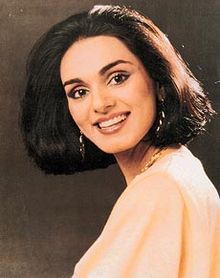
Neerja Bhanot and the spirit of humanity


Neerja Bhanot (1963 – 1986) was a flight purser for the now-defunct airlines Pan Am. She was an ordinary girl from an ordinary middleclass family based in Mumbai. Her twenty-three years of life was ordinary too, except for the last 17 hours, when she showed amazing courage, compassion for others, presence of mind, and absolute, unbelievable selflessness. 

Neerja was born to Rama and Harish Bhanot, a journalist, in Chandigarh. After she completed Standard 5 in Chandigarh, her family moved to Mumbai. Besides studying in college, she started working as a model too. She had an arranged marriage in 1985 and joined her husband in the Gulf. Unfortunately, like thousands of Indian males, her husband turned out to be a scoundrel who tortured her for dowry. Her marriage survived just two months. Back home, she applied for and got a job as an air hostess with Pan Am. She went to Miami to train as a flight attendant, but came out of the training as a flight purser. The Pan Am authorities had spotted her qualities with great prescience, as later events would prove when she saved the lives of a few hundred people.

On 5 September 1986, two days before her 23rd birthday, Neerja boarded the Pan Am Flight 73 in the small hours in a dark and sleeping Mumbai. She was the head of the in-flight staff when – two hours later – the aircraft was hijacked by four Palestinian terrorists from the Abu Nidal group just before its take-off from Karachi. The plane had 340 passengers. The terrorists wanted to fly to Cyprus and get some of their fellow criminals released from jail there.

And that’s when an utterly asymmetric struggle began between ordinary unarmed passengers and crew on one side, and four ruthless terrorists armed to their teeth on the other. And in this struggle, if I may say so, the people on the side of humanity was led by a 23-year-old girl, Neerja Bhanot.

As soon as Neerja realized that the four men wearing Karachi Airport Security uniform were actually terrorists, she alerted the cockpit. And the all-American cockpit crew of the pilot, co-pilot, and flight engineer, following Pan Am protocol, left the aircraft through an emergency overhead hatch. I recall that when I read this in 1986, I thought this was an act of unbelievable cowardice and the protocol was stupid and irresponsible. My thought was perhaps natural for someone who had grown up with stories that say the captain is always the last man to leave a sinking ship. But the point could be debated, and let’s move back to the story.

Neerja, being the senior-most cabin crew, had to take charge of the aircraft. The hijackers instructed her to collect the passports of all the passengers. The idea was to put pressure on the USA by identifying and possibly killing Americans on board one by one. Neerja had guessed the hijackers’ intention and saved dozens of American lives by simply hiding ALL the American passports – some under seats and some down a garbage chute. Clearly, this was the first of the several huge personal risks she took to save the passengers. She would surely have been tortured and killed if the trick was found out by the terrorists.

During the seize, one cabin attendant, probably Neerja herself, hid a page of the Flight Manual that described how to open an emergency exit and asked the passenger sitting next to it to “read the magazine carefully.” He did, and this saved some lives hours later.

After 17 hours of stalemate, the aircraft was plunged into semi darkness as the auxiliary power supply ran out and the emergency lights turned on automatically. The nervous and frustrated hijackers opened fire and set off explosives.

The man sitting next to the emergency exit managed to open the door, but couldn’t activate the slide that would help passengers deplane. Yet, some of them jumped off the door at a height of 15 feet above the tarmac.

Neerja opened another door, flung open an emergency chute, and assisted passengers from the aircraft to get off.

She could have been the first to jump off when she opened the door but …

She decided to stay back and help others. Like a real hero, she helped elderly passengers to leave the plane, while every passing moment brought her closer to her own death. And she was shot from behind while shielding three children from a hail of bullets and certain death.

From a total of 379 (359 passengers and 20 crew), 20 got killed, but 359 survived thanks mainly to Neerja. One of the children, then aged 7, is now a pilot with a major airline. He says Neerja Bhanot has been his inspiration and he owes every day of his life to her. Neerja was recognized internationally as "the heroine of the hijack" and posthumously received Ashoka Chakra, India's highest peace-time gallantry award.

And it was not Neerja alone, as the passengers looked death from close quarters, they too showed tremendous courage, compassion and support for fellow humans. A musician Nayan Pancholi who was in that flight has written in India Today TV’s online edition: “That day, nobody saw any religion, caste, or creed in each other. That day, we saw each other as humans and wanted to help each other and save each other’s lives. It's as simple as that in end.”

*

Let’s now move on to the film which is based broadly on this storyline. A similar narrative can also be seen on Wikipedia and elsewhere. However, some of Neerja’s colleagues in the flight have said this story is more fictional than real. Their point is simple, it was not Neerja alone, but every member of the crew who showed tremendous courage under stress. Maybe they are right, maybe they have a point. But on the Net, they are being abused squarely in high-decibel filthy language and kicked in different parts of their body for being – believe me – “unpatriotic”! Who says India has become intolerant?

And that is the reason I would salute the makers of the film including the director Ram Madhvani. With many other Bollywood film makers today, this film would have been subtly anti-Muslim and crudely anti-Pakistan. But the film is neither. Check these scenes.

When an officer tells the head of the Karachi Airport that there are 44 Pakistanis on the flight, the boss reacts angrily: ‘Do you want me to save the 44 Pakistanis and say “sorry” to the rest?’

In another scene, a man, who looks very much like a Muslim, is seen pushing an American passport under the seat.

For this reason alone, the movie Neerja is worth watching. In the ultimate analysis, even if the plot of the film is partly fictional, it tells a story of the human spirit, and of human values that come to surface when people are face to face with a deadly enemy, be it terrorists or be it floods.

Kolkata / Thursday, 25 February 2016
(Pictures courtesy the Wikipedia)